Packaging trends 2027: 10 ideas shaping the future of packaging design
By Artsy Packaging · · Blog

Packaging decisions are becoming more complex as businesses balance rising costs, sustainability expectations, product protection and changing customer preferences. Oversized boxes, unnecessary materials and outdated designs can increase packaging costs, create avoidable waste and make products less appealing to customers.
Failing to adapt can leave businesses with inefficient packaging, weaker brand presentation and solutions that no longer meet market expectations. This guide explores 10 packaging trends shaping 2027, from evidence-based sustainability and right-sized structures to connected technology, bold designs and AI-assisted development. Discover what each trend offers, where it works best and how to choose the right approach for your products, customers and business goals.
What Are the Biggest Packaging Trends Shaping 2027?
Packaging trends in 2027 reflect changing consumer expectations, sustainability priorities, new technologies and evolving brand experiences. These trends influence how businesses choose materials, design packaging, and communicate product value.
Compare 10 packaging trends for 2027, their benefits, uses and limitations.
| No. | Trend | What It Is | Why It Matters | Best Suited To | Main Watchout |
|---|---|---|---|---|---|
| 1 | Evidence-Based Sustainability and Mono-Materials | Packaging that uses simplified material constructions, recyclable formats where suitable and substantiated environmental claims. | Reduces material complexity and supports more responsible packaging decisions. | Food, beauty and consumer goods brands. | Check material suitability, sourcing evidence and local recycling options. |
| 2 | Right-Sized and Lightweight Packaging | Packaging designed to fit products efficiently while reducing unnecessary material and weight. | Reduces packaging waste, storage requirements and transport volume. | E-commerce, subscription and retail brands. | Maintains sufficient protection during storage and delivery. |
| 3 | Connected Packaging: 2D Barcodes, NFC and QR | Packaging featuring digital technologies that connect physical products with online information. | Improves product transparency, traceability and customer engagement. | Food, drink, beauty and premium product brands. | Keeps digital information accessible, accurate and easy to scan. |
| 4 | Restrained and Quiet Premiumisation | Packaging that communicates quality through minimal layouts, subtle finishes, refined typography and carefully selected materials. | Creates a distinctive premium presentation through restrained design, tactile materials and selective finishing. | Luxury, cosmetics, gifting and premium food brands. | Balance visual simplicity with brand recognition and readability. |
| 5 | Illustrated Patterns and Colour-Saturated Blocks | Packaging featuring expressive illustrations, bold colours, vibrant patterns and distinctive visual combinations. | Helps products stand out and creates memorable brand identities. | Food, drink, beauty and lifestyle brands. | Maintain visual consistency and readability across product ranges. |
| 6 | Transparent Product Storytelling | Packaging that communicates product ingredients, sourcing, production details and brand information clearly. | Builds customer confidence through accessible and credible product information. | Food, beauty, wellness and ethical consumer brands. | Keep claims accurate, relevant and supported by evidence. |
| 7 | Reusable and "Worth-Keeping" Packaging | Packaging designed for repeated use, refilling, returning or repurposing beyond its original purpose. | Extends packaging life and may reduce demand for replacement packaging. | Beauty, personal care, household and premium gifting brands. | Consider durability, cleaning, return rates and refill convenience. |
| 8 | AI-Accelerated Development and Prototyping | Using AI tools to support packaging concepts, visual exploration, structural development and design iterations. | Speeds up concept exploration and helps teams evaluate design possibilities. | Packaging manufacturers, product developers and consumer brands. | Validate AI-generated concepts through technical reviews and physical prototypes. |
| 9 | E-Commerce-Ready Structural Protection | Packaging engineered to protect products against movement, impact and handling throughout delivery. | Reduces product damage and supports more reliable online fulfilment. | E-commerce, electronics, cosmetics and fragile product brands. | Test structural strength, inserts and product stability during transit. |
| 10 | Adaptable and Modular Packaging Systems | Packaging systems designed with interchangeable components, adjustable inserts or flexible configurations for different products. | Improves packaging flexibility and reduces the need for multiple separate designs. | Retail, e-commerce, subscription and multi-product brands. | Ensures components fit securely and remain practical to assemble. |
Evidence-Based Sustainability and Mono-Materials
Sustainable packaging in 2027 focuses on simpler material structures, improved recyclability and credible environmental claims. Brands are exploring mono-material designs, fibre-based alternatives and reduced material complexity to make packaging easier to recover and process.
1. Mono-Material Structures Support Recycling
Mono-material packaging uses a single material or compatible polymer family across its main structure, reducing the need to separate different materials during recycling.
- PE and PP-based pouches: Flexible packaging structures using polypropylene-based layers and compatible components.
- Simplified films: Reduce incompatible material layers.
However, barrier layers, adhesives, inks and closures can affect recyclability. Mono-material construction does not automatically make packaging recyclable.
2. Fibre-Based Packaging Offers Alternatives
Paper and paperboard provide alternatives to certain plastic packaging components.
- Corrugated boxes: Used for shipping and product protection.
- Paperboard cartons: Common in retail and consumer goods packaging.
- Moulded pulp inserts: Provide cushioning and support for products.
- Die-cut paperboard cradles: Hold products securely inside boxes.
Coatings, laminations and other added components can affect the recyclability of fibre-based packaging.
3. Simplifying Packaging Structures
Reducing mixed materials, unnecessary layers and difficult-to-separate components can support material recovery. Alternative inserts, simpler flexible structures and fewer decorative components may help achieve this, depending on the complete packaging design.
4. Understanding Sustainability Terms
- Recyclable: Can be collected and processed through suitable recycling systems.
- Recycled content: Contains material recovered from previous products or processes.
- Reusable: Designed for repeated use.
- Compostable: Designed to break down under specified composting conditions.
These terms describe different properties and should not be used interchangeably.
5. Supporting Environmental Claims with Evidence
Brands should support claims about recyclability, recycled content and material sourcing with reliable evidence. Supplier documentation, material specifications and compatibility with relevant recycling systems help substantiate these statements.
Key takeaway: Sustainable packaging focuses on simpler structures, suitable material choices and evidence-backed environmental claims. Businesses should assess the complete packaging construction, product protection requirements and available recycling systems before selecting materials.
Right-Sized and Lightweight Packaging
Right-sized and lightweight packaging reduces unnecessary materials, space and shipping volume while maintaining product protection. Businesses achieve this by matching box dimensions to product measurements, selecting suitable board grades and limiting excess void fill.

1. Reducing Material Use and Packaging Costs
Custom-sized cartons, fitted inserts and lighter board grades help reduce excess cardboard, protective materials and packaging weight. Smaller boxes also make better use of warehouse storage and shipping space.
2. Improving Storage and Transport Efficiency
Compact packaging allows more products to fit into warehouse storage areas, pallet loads and delivery vehicles. Better space utilisation can improve distribution efficiency and reduce transport requirements.
3. Comparing Box Sizes
The following example shows how changes in box dimensions affect the calculated box volume.
| Box size (L × W × H) | Internal Volume |
|---|---|
| 40 × 30 × 20 cm | 24,000 cm³ |
| 35 × 25 × 15 cm | 13,125 cm³ |
The smaller box has approximately 45% less calculated volume than the larger box. This illustrates the difference in box capacity, not a guaranteed reduction in shipping costs or material use.
4. Maintaining Product Protection
The smallest box is not always the best choice. Insufficient space for protective materials may increase damage, while weak cartons and unstable pallet arrangements can create handling problems. Test box fit, packing speed, stacking stability and damage rates before finalising the design.
Key takeaway: Right-sized packaging improves material and transport efficiency through suitable dimensions, lighter materials and reduced void fill. The best design balances space savings with reliable product protection.
Connected Packaging: 2D Barcodes, NFC and QR
Connected packaging uses QR codes, GS1 2D barcodes and NFC tags to link physical products with digital information. It helps brands extend product details, improve traceability and create more interactive customer experiences beyond the printed label.
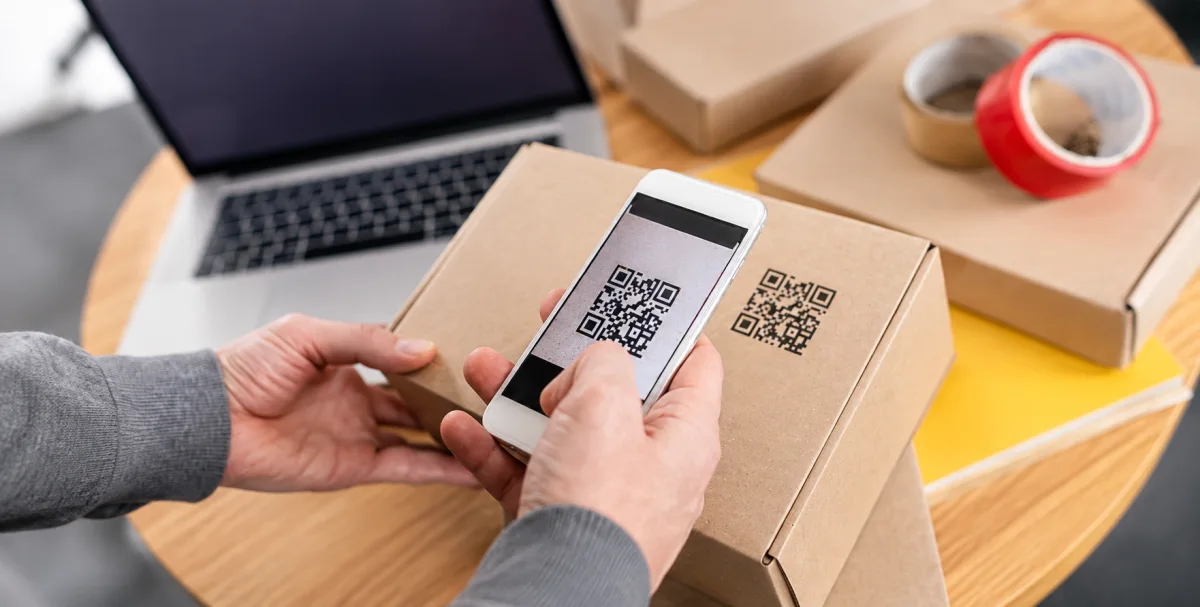
1. Sharing More Product Information
Digital links provide access to information beyond the printed label, including ingredients, instructions, recipes and recycling guidance.
- QR codes: Link customers to websites, product information and digital content.
- GS1 Digital Link QR codes: Connect product identifiers with online information through GS1 standards.
- GS1 DataMatrix: Encodes standardised product identifiers and additional data, such as batch numbers and expiry dates.
- NFC tags: Allow customers to access digital information by tapping compatible smartphones against packaging.
2. Creating Interactive Brand Experiences
Augmented reality, games and digital storytelling make product discovery more engaging. Customers can also access loyalty programmes, feedback forms and reordering options.
3. Supporting Traceability and Authentication
Digital identifiers help brands share product origins, track batches and provide authentication details, improving supply chain visibility and customer confidence.
4. Measuring Customer Engagement
Scan activity and voluntarily shared data help brands understand customer interests, measure campaign performance and improve communication. Data collection should comply with privacy requirements, including UK GDPR.
5. Preparing for GS1 Sunrise 2027
GS1 Sunrise 2027 is an industry initiative aiming to enable retail point-of-sale systems to scan and process GS1-compliant 2D barcodes by the end of 2027. Brands supplying retail products should review barcode standards, print quality and retailer requirements when planning packaging updates.
Key takeaway: Connected packaging extends product information, supports traceability and encourages customer engagement. Brands should select QR codes, NFC tags or GS1 2D barcodes based on their communication and retail needs.
Restrained and Quiet Premiumisation
Minimalist design is becoming a popular premium packaging trend because it creates a refined appearance through simplicity, clean layouts and carefully selected details. Brands use this approach to highlight product quality and strengthen brand identity without excessive decoration.
1. Simple Layouts Create a Refined Appearance
Limited colour palettes, clear typography and generous whitespace keep attention on the brand and product presentation.
2. Tactile Finishes Add Subtle Detail
Textured materials and selective finishes create visual and sensory interest.
- Textured papers: Add depth and a distinctive feel.
- Embossing and debossing: Create subtle raised or recessed branding.
- Foil accents: Add metallic detail and contrast.
- Soft-touch finishes: Provide a smooth, tactile surface.
- Rigid boxes: Offer a premium presentation for cosmetics, jewellery, chocolate and luxury gifts.
3. Simpler Designs Support Material Efficiency
Fewer decorative layers, inks and material combinations may reduce material use. However, recyclability depends on the complete packaging construction and local recycling facilities.
4. Quality and Functionality Remain Essential
Minimalist designs make imperfections more noticeable, requiring precise alignment, consistent colours and clean finishing. Specialist materials and finishes may also increase costs. Brands should balance appearance with product protection, readability and practical material choices.
Key takeaway: Minimalist packaging combines simple layouts, quality materials and subtle finishes to create a premium appearance while maintaining functionality and brand identity.
Illustrated Patterns and Colour-Saturated Blocks
In 2027, brands are embracing vibrant colours, high-contrast combinations and playful illustrations to create distinctive packaging, differentiate product ranges and strengthen brand recognition across retail shelves and online platforms.
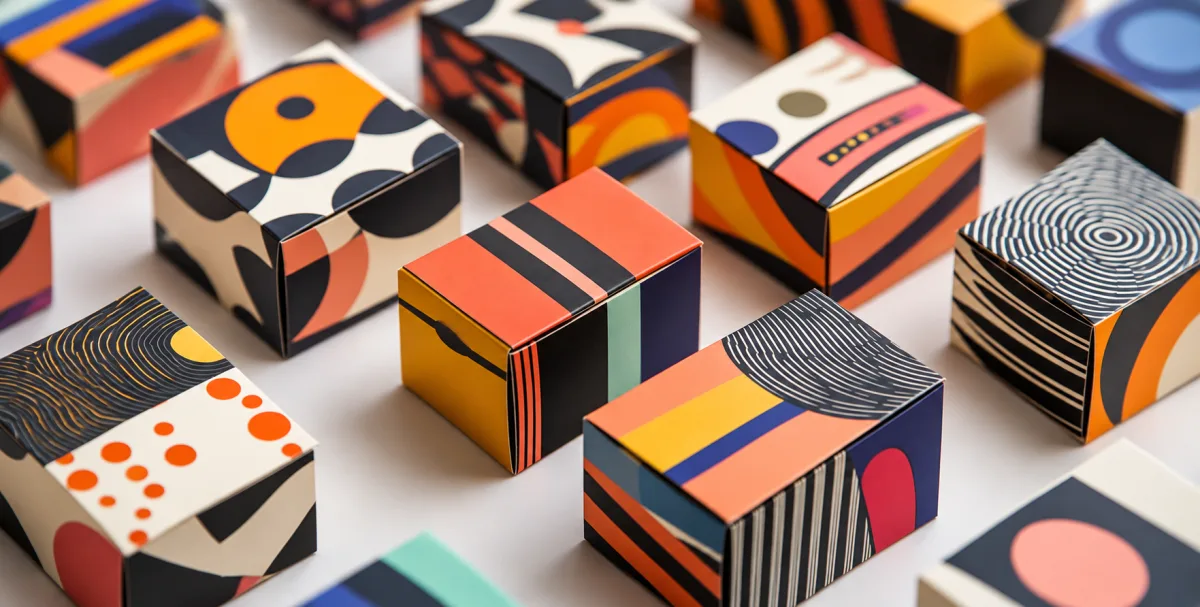
1. Bold Colour Palettes: Creating Visual Impact
Saturated colours and contrasting combinations help products stand out against competing packaging designs.
- High-contrast colours: Pairings such as bright pink with vibrant green or electric yellow with deep teal create distinctive visual impact.
- Colour-coded variants: Different colour schemes help customers identify flavours, collections and product ranges.
- Brand recognition: Consistent use of signature colours makes products easier to recognise across different platforms.
2. Illustrated Patterns: Adding Personality
Hand-drawn artwork, repeat patterns and playful illustrations give packaging a distinctive appearance beyond plain colour blocks.
- Hand-drawn graphics: Organic lines and imperfect illustrations create a more personal, crafted appearance.
- All-over patterns: Repeating artwork creates visual consistency across packaging surfaces.
- Playful characters: Mascots and whimsical illustrations give products personality and encourage customer engagement.
3. Balancing Bold Designs with Readability
Expressive packaging still needs clear product information. Brands should balance vibrant colours and detailed illustrations with readable typography, consistent logo placement and sufficient space for product names and variants.
4. Adapting Designs for Retail and E-commerce
Packaging should remain recognisable across physical shelves and digital product listings. Review product images at their typical display size to check whether logos, product names and variant information remain recognisable without zooming in.
Key takeaway: Bold colours and illustrated patterns help brands create distinctive packaging in 2027. Combining expressive artwork with clear layouts and consistent brand elements ensures visual impact without compromising product recognition.
Transparent Product Storytelling
Transparent product storytelling uses honest product imagery, clear sourcing information and substantiated claims to help customers understand what they are buying. Packaging supports this through visible product details, ingredient information and QR-linked provenance, building trust through evidence rather than marketing promises.

1. Honest Imagery Builds Customer Trust
Product photography and illustrations should accurately represent the contents. Misleading images or generic visuals can create unrealistic expectations and customer complaints. Product windows can also give customers a direct view of the contents.
2. Clear Information Supports Informed Choices
Printed origin panels, ingredient details and sourcing information help customers understand product composition and production. QR codes can provide additional details about ingredients, supply chains and product traceability.
3. Substantiated Claims Strengthen Credibility
Packaging claims should reflect verifiable product information rather than vague marketing promises. Limit claim badges to the most relevant details and ensure environmental or sourcing statements have supporting evidence.
Important consideration: Product windows and additional packaging components can complicate material separation and recycling. Choose packaging structures that balance product visibility, protection and recyclability.
Reusable and "Worth-Keeping" Packaging
Reusable and worth-keeping packaging is designed to provide functional or emotional value beyond its original purpose. Durable boxes, refillable containers and adaptable formats encourage customers to retain and reuse packaging, extending its useful life and reducing single-use waste.
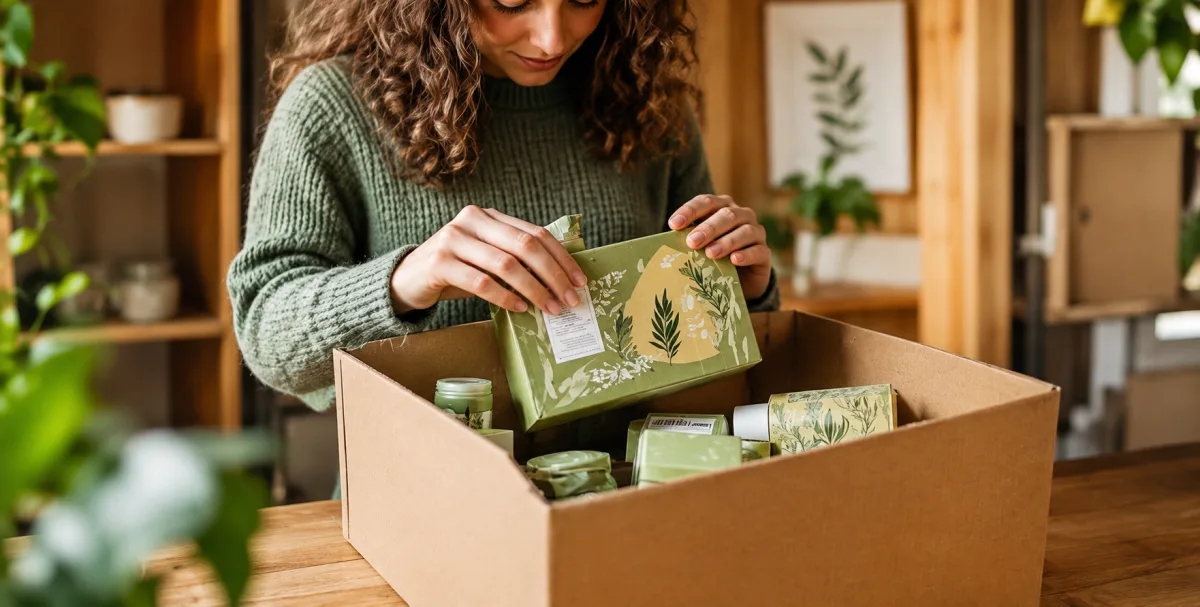
1. Functional Design Encourages Reuse
Rigid gift boxes, presentation boxes and durable pouches offer practical second uses for storing accessories, personal items and keepsakes. Sturdy materials and thoughtful construction make packaging more useful beyond unboxing.
2. Refillable Formats Extend Packaging Life
Refillable containers and concentrate-based products allow customers to replenish products without replacing the primary packaging. These formats are particularly relevant to beauty, personal care and household brands.
3. Emotional Value Encourages Retention
Distinctive designs, quality finishes and meaningful details can turn packaging into a keepsake. However, attractive appearance alone is not enough; packaging needs a practical purpose customers value.
Important distinction: Keepsake packaging is not a return system. Returnable packaging requires collection, cleaning and redistribution. Brands should measure return rates, losses and reuse cycles to assess whether reuse delivers genuine benefits.
AI-Accelerated Development and Prototyping
AI is helping packaging teams explore design concepts, create early mock-ups and test visual variations more quickly. It supports the initial stages of the packaging design process, while human designers remain responsible for technical accuracy, print preparation and final approval.
AI tools are useful for:
- Mood boards: Exploring colour palettes, patterns, finishes and visual directions.
- Rough mock-ups: Visualising early packaging concepts before production.
- Variation testing: Exploring different layouts, artwork styles and design options.
However, AI-generated visuals may show packaging structures that cannot be manufactured, distorted product details or illegible text. Designers need to check artwork ownership, licensing and usage rights before using generated assets commercially.
Human review remains essential for accurate dielines, typography, print colour specifications, legal labelling and product claims. A practical workflow moves from an AI-assisted digital preview to a structural sample and then a printed sample. Each stage helps check a different aspect of the packaging before production begins.
AI speeds up creative exploration, but physical sampling and professional design checks remain essential for production-ready packaging.
E-Commerce-Ready Structural Protection
E-commerce-ready packaging protects products through cushioning, internal restraint and a strong outer carton designed to withstand handling and transport conditions.
- Cushioning Absorbs Impact: Cushioning materials absorb impact energy during drops and handling. Foam inserts, bubble wrap, paper cushioning and moulded pulp help protect products from physical damage.
- Blocking and Bracing Prevent Movement: Die-cut inserts, cardboard dividers and fitted supports hold products in position, preventing them from shifting or colliding during transit.
- Void Fill Stabilises the Contents: Paper fill and air cushions occupy unused space inside cartons, reducing product movement and helping keep items securely positioned.
- Outer-Carton Strength Resists Compression: Corrugated board grade, flute construction and box design influence resistance to stacking loads, compression and handling forces.
- Secure Closures Keep Packages Intact: Packing tape, adhesive closures and locking mechanisms help prevent cartons from opening during delivery. Tamper-evident features also make unauthorised opening more noticeable.
Key takeaway: Effective e-commerce packaging combines cushioning, internal support, suitable carton strength and secure closures to protect products throughout delivery.
Adaptable and Modular Packaging Systems
Adaptable and modular packaging systems use standardised structures, interchangeable components and flexible designs to accommodate different product variants. They help growing brands expand product ranges and regional offerings without requiring a completely new packaging structure for every launch.
1. Standardised Structures Simplify Expansion
Brands can use approved box structures across multiple product sizes or ranges, with controlled adjustments to dimensions, inserts and materials. This reduces repeated structural redesign while maintaining consistent packaging quality.
2. Interchangeable Designs Support Product Variations
Changeable sleeves, modular labels and reserved artwork areas allow brands to update product names, colours, ingredients or regional information without redesigning the entire box.
3. Digital Printing Supports Short Runs
Digital printing makes it easier to produce limited editions, seasonal designs and smaller product batches. Brands should maintain recorded specifications for dimensions, board, colours and finishes to support consistent reorders.
Important consideration: Modular packaging still requires careful cost planning. Compare per-unit costs across different production volumes and check colour consistency between print runs.
UK packaging regulation and EPR: what to check for 2027
UK packaging regulations are increasingly influencing material selection, packaging design and environmental claims. Businesses should review Extended Producer Responsibility (EPR), recyclability requirements and relevant export-market rules before developing packaging for 2027. Requirements vary according to business size, packaging activities and destination markets.
The following is general information, not legal advice.
| Requirement | Who it affects | Design implication |
|---|---|---|
| Extended Producer Responsibility (EPR) | UK businesses that meet the applicable EPR producer criteria and turnover and packaging-volume thresholds. Reporting, registration and disposal-fee obligations depend on producer size and activity. | Review packaging weight and material composition because disposal fees depend on reported packaging weight and material type. |
| Recyclability Assessment Methodology (RAM) 2027 | Large producers subject to EPR must assess relevant packaging recyclability using RAM 2027 and report the assessment results to the environmental regulator. | Assess packaging recyclability and prioritise materials compatible with UK collection and recycling infrastructure. |
| Modulated EPR Fees | Large producers subject to EPR disposal fees are affected by recyclability-based fee modulation. Green, amber and red RAM ratings influence the applicable fee treatment, creating a financial incentive to improve packaging recyclability. | Improve recyclability to reduce exposure to higher fees. Green, amber and red ratings influence disposal fee levels. |
| EU Packaging and Packaging Waste Regulation (PPWR) | UK businesses placing packaging on the EU market. | UK businesses placing packaging on the EU market should review requirements for packaging composition, recyclability, reuse, labelling and waste prevention, noting that obligations apply from different dates. |
| Environmental Claims and Consumer Law | UK brands, manufacturers, suppliers and retailers making environmental claims. | UK businesses should ensure packaging-related environmental claims are clear, accurate and evidence-based, avoiding broad terms such as “sustainable” and “eco-friendly” without supporting proof. |
What Do These Regulations Mean for Packaging Design?
Businesses should consider lighter structures, fewer unnecessary components and materials compatible with established recycling systems. Environmental claims should also have credible supporting evidence rather than relying on general sustainability promises.
Important: EPR obligations depend on producer status and applicable thresholds. RAM 2027 relates to the 2027 reporting year, while EU PPWR requirements follow a separate implementation timetable. Businesses should check current official guidance for their specific obligations.
General information only, not legal advice.
How to choose which packaging trend to follow
Choose a packaging trend by matching it to your product requirements, customer expectations, brand identity and production capacity. Not every trend suits every business, so evaluate the following five factors before investing in a new packaging approach.

1. Start with your product requirements. Identify what your packaging needs to achieve. Fragile products may need stronger protective structures, while food, cosmetics and retail products may require specific storage, presentation or handling considerations. Choose trends that address these requirements.
2. Match the trend to your brand identity. Consider your target audience, product positioning and price point. Minimalist designs may suit brands with a clean, understated identity, while premium finishes and personalised details may work better for luxury gifting.
3. Check production feasibility. Confirm whether your chosen design, material and finish can be produced within your budget and required order quantity. Check minimum order quantities, material availability, production capabilities and consistency across repeat orders.
4. Verify material and performance claims. Check whether sustainability claims, recyclability statements and functional benefits are supported by reliable evidence. Review material specifications and applicable recycling requirements before making environmental claims.
5. Plan for future growth. Consider whether the packaging design will accommodate new product sizes, additional SKUs and higher order volumes. A flexible packaging structure can make future product launches and repeat orders easier to manage.
Which Packaging Trends Should You Choose?
Use your business model and packaging priorities to narrow down the most relevant trends. Before making your final choice, shortlist the trends that meet your requirements, compare their production feasibility and review samples where available. This helps you assess the actual structure, finish and suitability of your packaging before committing to an order.
| Your business situation | Trends to consider | What to prioritise |
|---|---|---|
| Online-only brand | Right-Sized and Lightweight Packaging; E-Commerce-Ready Structural Protection | Shipping protection, efficient packaging dimensions and memorable unboxing. |
| Premium gifting brand | Restrained and Quiet Premiumisation; Reusable and "Worth-Keeping" Packaging | Luxury finishes, presentation and personalised customer experiences. |
| Retail-listed brand | Connected Packaging: 2D Barcodes, NFC and QR | Shelf visibility, product recognition and retail presentation. |
Explore our product packaging options or request a packaging quote to discuss the right packaging solution for your business.
Frequently Asked Questions
What are the biggest packaging trends for 2027?
The biggest packaging trends for 2027 include evidence-based sustainability, mono-material structures, right-sized packaging, connected packaging, minimalist design, bold colours, transparent product storytelling, reusable packaging, AI-assisted development, e-commerce-ready protection and modular packaging systems.
Will sustainable packaging become mandatory in 2027?
Sustainable packaging is not universally mandatory for every business in 2027. However, regulations such as the UK Extended Producer Responsibility (EPR) and the EU Packaging and Packaging Waste Regulation (PPWR) introduce specific obligations for businesses within their scope. Requirements depend on business activities, packaging types and the markets where products are sold.
Are QR codes or 2D barcodes required on packaging in 2027?
QR codes and 2D barcodes are not mandatory on all packaging in 2027. Their use depends on product type, market requirements and relevant regulations, although brands may adopt them voluntarily to provide product details, traceability information, instructions and sustainability data.
Is paper packaging always recyclable?
Paper packaging is not always recyclable because its composition, coatings, laminations and contamination can affect recycling suitability. Clean, uncoated paper and cardboard are generally widely recyclable, but packaging with mixed materials or certain finishes may require specialist processing or may not be accepted by local recycling facilities.
What is the difference between recyclable and recycled-content packaging?
Recyclable packaging is designed to be collected and processed into new materials or products through suitable recycling systems. Recycled-content packaging contains material recovered from previous products or packaging. A package can be recyclable without containing recycled material, while recycled-content packaging is not automatically recyclable.
How is AI changing packaging design?
AI is changing packaging design by helping businesses explore design concepts, generate artwork variations, analyse customer preferences and speed up creative development. Designers can use AI-assisted tools to evaluate different visual approaches and refine concepts, although structural performance, material suitability and final artwork still require human review.
Is minimalist packaging cheaper?
Minimalist packaging can reduce costs when it uses fewer materials, simpler structures and less complex printing. However, savings depend on product protection requirements, material prices, manufacturing processes and order quantities. Businesses should assess the total production and delivery costs rather than assuming simpler packaging is always cheaper.
How should businesses choose the right packaging trend?
Businesses should choose packaging trends that match their product requirements, brand positioning, customer expectations and production budget. Assess material suitability, manufacturing feasibility, environmental claims and future scalability before making a decision. Testing samples and reviewing packaging specifications can also help determine whether a trend is practical for repeat production.