 Apparel Boxes
 Candle Boxes
 Bakery Boxes
 Cbd Boxes
 Medical Boxes
 Automotive Boxes
 Jewellery Boxes
 Cannabis Boxes
 Xmas Boxes
 Cosmetic Boxes
 Gift Boxes
 Hemp Boxes
 Vape Boxes
 Retail Boxes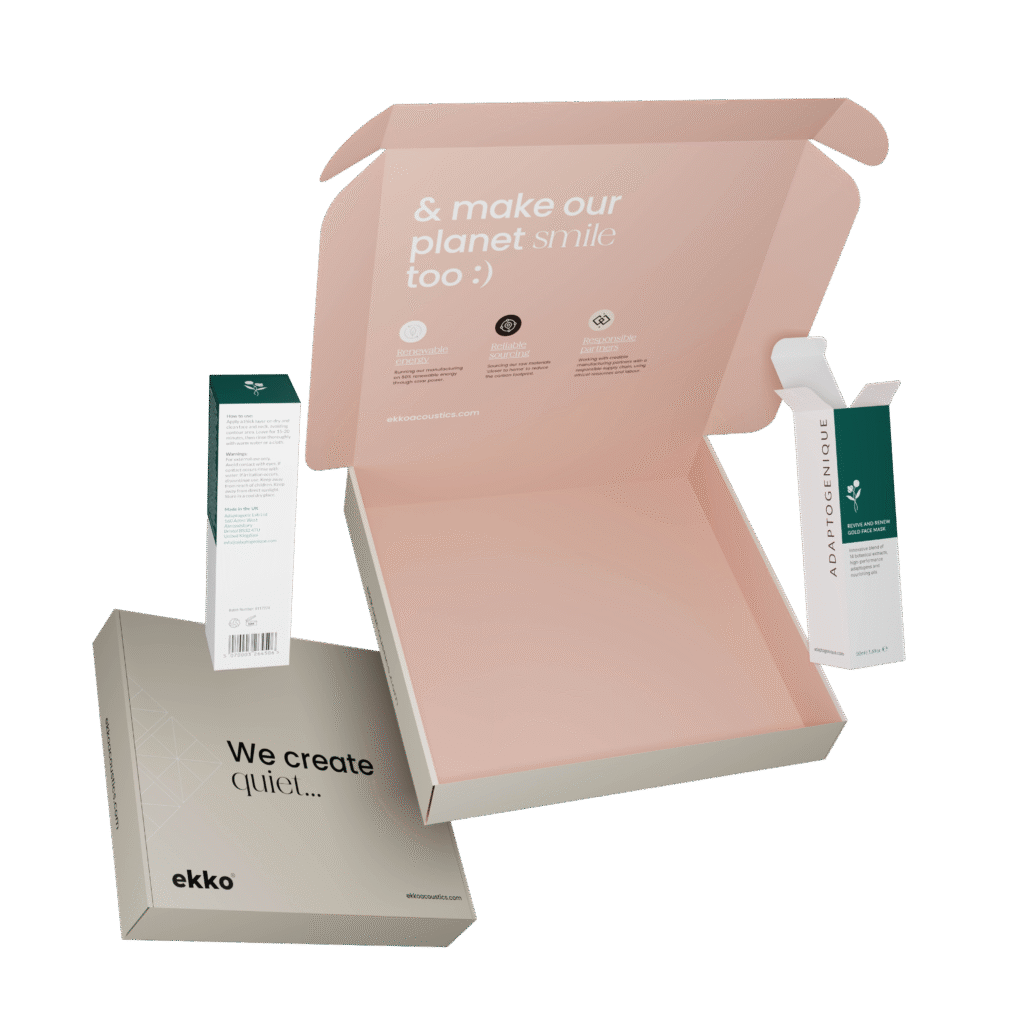
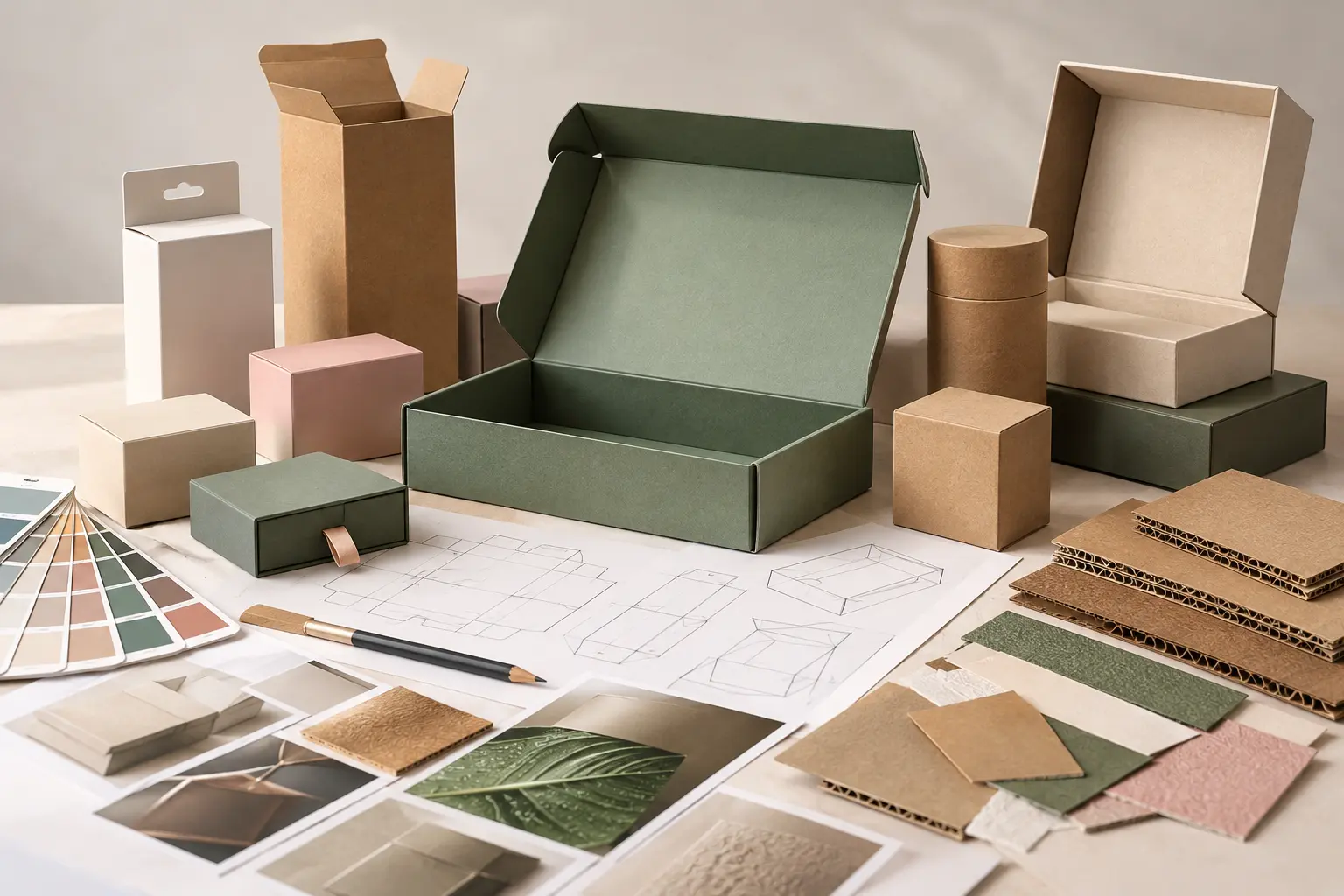
Packaging design defines how a package is structured, produced, and used, while branding shapes how it looks, communicates, and represents the brand to customers. Branding guides these design decisions by translating the brand’s identity, personality, values, and positioning into a consistent packaging experience that customers can recognise and associate with the brand. The visual design of the package communicates the product and brand to customers, while the structural design establishes how the package is formed, opened, closed, and used.
Packaging structure and materials determine how a package performs in terms of strength, protection, durability, handling, storage, and transport. Structural components and box construction define how the package is formed, opened, closed, and used, while different formats such as mailer boxes, folding cartons, tuck-end boxes, rigid boxes, and drawer boxes provide different functional and presentation options.
Branding and visual design translate brand identity into the physical package through its visual language, communication, and presentation. Colours, typography, logos, imagery, layout, materials, and finishes establish visual consistency, support brand recognition, communicate product information, and express the brand’s personality, values, positioning, and story.
The packaging design process brings structural and branding considerations together through research, strategy, concept development, prototyping, testing, refinement, and production. The final packaging needs to balance functional performance, brand communication, manufacturing requirements, sustainability, logistics, and customer experience to create a solution that works effectively from production through to use.
What is Packaging Design?
Packaging design is the strategic and creative process of combining packaging structure, materials, visuals, information, and functionality to protect, present, and communicate a product. Packaging design determines how it looks, functions, protects the product, and communicates with customers throughout their interaction with it.
Packaging design combines structural, material, visual, branding, and informational elements to create packaging that protects the product, communicates key details, and presents the brand effectively. The structure of packaging design determines the package’s size, shape, dimensions, and construction.
Packaging materials provide support, protect, and present the product. Packaging visual design uses packaging colours, typography, logos, imagery, graphics, and layout to communicate the product and create a recognisable brand presentation. Information on packaging design provides important product information such as ingredients, instructions, usage details, safety warnings, and brand messages.
Packaging functionality determines how easily packaging can be opened, closed, handled, stored, and reused. Packaging connects the product with the brand and creates brand identity through consistent packaging visual and structural elements. When these packaging elements work together, they create a positive unboxing experience and strengthen the overall customer interaction with the product.
What is Branding in Packaging Design?
Branding in packaging design is the use of visual and structural elements such as logos, colours, typography, materials, imagery, and finishes to express a brand’s identity on a physical package. Branding in packaging helps you to recognise a product and distinguish it from competing products.
A brand expresses its brand’s identity, visual style, and core values through its packaging design. Visual identity in branding creates consistency through elements such as logos, colours, typography, and imagery, while materials, textures, finishes, and structural design influence how customers perceive and interact with the package.
Packaging branding therefore turns the package into a physical brand touchpoint that communicates the brand’s personality, values, positioning, and visual style. Branding in packaging differentiates products from competitors, creates a strong first impression, and builds long-term brand recognition through consistent visual and physical cues.
What Do Brand Identity, Personality, Values, and Positioning Mean in Packaging?
Brand identity in packaging design is the collection of visual and verbal elements, such as the brand name, logo, colours, typography, imagery, and tone of voice, that make a brand recognisable. Brand personality is the human-like character a brand communicates through packaging, such as playful, professional, friendly, luxurious, or adventurous. Brand values are the principles and beliefs a brand represents, such as quality, sustainability, innovation, simplicity, or affordability.
Brand positioning is how a brand is presented in relation to competitors, highlighting the qualities, benefits, or value that make it different and relevant to its target customers. All these elements guide how packaging looks, communicates, and represents the brand, helping create a consistent identity and recognisable customer experience.
How Does Packaging Build Brand Recognition and Consistency?
Packaging builds brand recognition through the repeated and consistent use of colours, typography, logos, imagery, shapes, and visual style across a product range. These repeated elements create familiar visual cues that help customers identify different products as belonging to the same brand. Brand consistency means maintaining the same core visual identity across products and customer touchpoints.
Consistent colours, logo placement, typography, imagery, and packaging structures create a unified appearance and strengthen the connection between individual products and the wider brand. Brand recognition is a consumer’s ability to identify a brand when they see familiar packaging elements, while brand recall is a user’s ability to remember the brand when thinking about a product or category without seeing its packaging.
What Are the Key Elements of Packaging Design?
The key elements of packaging design are colour, typography, logo, imagery, layout, and visual hierarchy. These elements determine how a package looks, communicates information, and represents a brand. Colour creates visual appeal and supports brand recognition, while typography makes written information clear and contributes to the package’s overall style.
The logo identifies the brand and connects the package with its identity. Imagery helps communicate the product and attract attention. The layout of the packaging design organises the different visual and informational elements within the package. Visual hierarchy guides the viewer’s attention by showing which information should be noticed first, followed by supporting details. All elements work closely to create packaging that is visually organised, recognisable, and easy for customers to understand.
How Do Colour, Typography, and Logos Shape Packaging Design?
Colour, typography, and logo design work together as powerful visual signals that shape brand recognition, communicate brand values, and influence consumer perception and purchasing decisions.
The role of colour, typography, and logo design in packaging is explained below.
- Brand Recognition: Colour and typography work together to create a consistent visual identity that helps customers recognise the brand.
- Brand Personality: Colour and typography communicate the brand’s tone, character, and intended positioning.
- Visual Appeal: Colour attracts attention, while typography creates an organised and visually balanced package.
- Information Hierarchy: Typography helps organise key information, while colour can highlight important details and guide visual attention.
- Product Positioning: The combination of colour and typography can communicate the product’s character, quality, and market positioning.
What Role Do Imagery, Graphics and Layout Play in Packaging?
Imagery and graphics turn packaging into a visual narrative, while layout controls how that narrative is read. Product photography, illustrations, patterns, icons, and other graphic elements can communicate a product’s purpose, personality, quality, or positioning before consumers read the detailed copy.
The importance of imagery, graphics, and layout in packaging design is discussed below.
- Grab Attention: Imagery and graphics help packaging stand out and attract customer attention in busy retail environments.
- Create Visual Appeal: Images, illustrations, and graphics communicate the product’s character and create a visual connection with customers.
- Guide Visual Attention: Layout, alignment, and spacing create a visual hierarchy that guides customers towards the brand name, product information, and key features.
- Communicate Information: Graphics, icons, images, and other visual elements help communicate product features, usage information, and other important details clearly.
- Reinforce Brand Identity: Consistent imagery, graphics, colours, and layout strengthen brand recognition and create a unified appearance across the product range.
What Is Visual Hierarchy in Packaging Design?
Visual hierarchy is the order in which a consumer’s eye is drawn across a package, typically from the product name to the brand and then to the key benefit. This order determines which elements receive attention first and helps consumers understand the product more easily.
Front-of-pack design creates this hierarchy by using size, colour, contrast, typography, positioning, imagery, and white space to make important information stand out. These design elements establish an information hierarchy, allowing consumers to scan the package and identify relevant details without giving equal attention to every element.
Packaging layout applies this information hierarchy by guiding the eye from the product name to the brand, then to a key benefit, followed by supporting information such as ingredients, certifications, or product specifications. The exact order can vary according to the product category, brand strategy, and consumer needs.
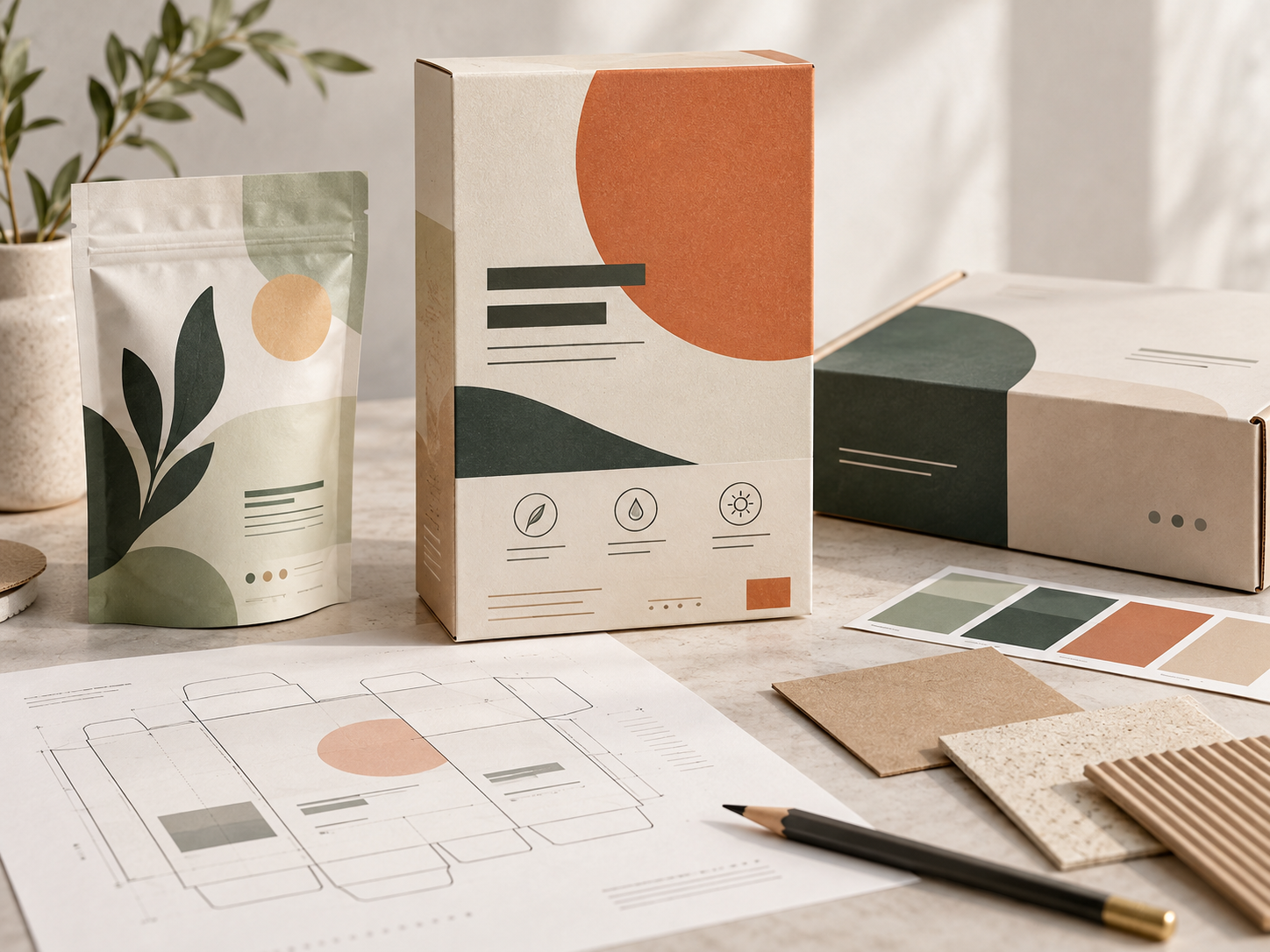
What Is The Structure of the Packaging Box?
A packaging box is made up of distinct physical components such as panels, flaps, a lid, a base, and seams, combined with a construction type that determines its strength. These components define how the box is formed, assembled, opened, closed, and secured, while the material of the box affects its durability, protection, and appearance.
Box panels form the main surfaces and define the box shape, while flaps fold inward or outward to close and secure the package. The lid covers the opening, the base supports the product, and seams connect different sections using adhesive or other joining methods. Creases, folds, locking tabs, and closures control how the box folds and remains closed.
Box structures arrange these components into different styles, including mailer boxes, tuck-end cartons, drawer boxes, folding cartons, and lid-and-base rigid boxes. Each structure provides a different method of opening, closing, and presenting the product.
Lid and Base Box: Consists of a separate lid and base, creating a rigid structure commonly used for gifts, luxury products, and premium presentation.
Mailer Box: Made from a single die-cut sheet with integrated flaps that fold and lock into place, making it suitable for e-commerce shipping.
Tuck-End Carton: Uses tuck-in flaps at the top and bottom, with straight-tuck or reverse-tuck variations commonly used for lightweight retail products such as cosmetics.
Drawer Box: Consists of an outer sleeve and an inner tray that slides out, creating a distinctive opening experience similar to a drawer.
What Are the Main Parts of the Packaging Box?
The main parts of a cardboard box include panels, flaps, scores, slots, and joints, along with the material layers that form its walls. Panels are the flat sections that form the main surfaces of the box, while flaps are extensions that fold inward or outward to close and secure it. Scores are creased lines that make the board easier to fold accurately. Slots are cut openings that allow flaps or locking tabs to fit together. A box joint is the area where sections of the box are connected, typically using adhesive, tape, stitching, or interlocking features.
What are the Different Box Styles and Wall Construction?
‘Box style’ refers to the physical design, shape, folding pattern, and opening or closure method of a packaging box, including styles such as custom mailer boxes, tuck-end boxes, sleeve boxes, rigid boxes, and corrugated shipping boxes. The style of the box determines how the box is assembled, accessed, displayed, and used.
Common box styles are given below.
- Mailer Box: A shipping-orientated box with integrated flaps and a self-locking closure, commonly used for e-commerce, subscription, and direct-to-consumer products.
- Tuck-End Box: A retail-orientated box with tuck-in flaps that create a simple and secure closure, commonly used for food, cosmetics, and consumer products.
- Rigid Box: A premium packaging style made from thick, rigid board, offering a sturdy structure for luxury, gift, and high-end products.
- Sleeve Box: A presentation-focused style consisting of a sliding sleeve fitted around an inner tray or box, creating a distinctive opening experience and space for branding.
- Roll-End Box: A mailer-orientated style formed from a single piece of board with rolled edges and integrated flaps, providing a secure closure for e-commerce and shipping applications.
- Auto-Lock Bottom Box: A quick-assembly style with interlocking bottom flaps that form a secure base when folded, reducing the need for separate adhesive.
- Two-Piece Box: A presentation-orientated style consisting of a separate lid and base, commonly selected for premium products and gift packaging.
- Drawer Box: A presentation-focused style featuring an inner tray that slides through an outer sleeve, creating a structured opening experience for retail and premium products.
Wall construction refers to the number of fluted layers and linerboards in corrugated board, with single-wall, double-wall, and triple-wall structures. It primarily affects the box’s rigidity, strength, cushioning, and protection.
Wall construction types vary in layers and protection, as discussed below:
- Single-Wall: One fluted layer between two linerboards. It is commonly used for lightweight and general-purpose packaging.
- Double-Wall: Two fluted layers separated by linerboards. It provides greater rigidity and protection for heavier or more fragile products.
- Triple-Wall: Three fluted layers combined with four linerboards. It is designed for demanding applications involving heavy products, industrial goods, or increased stacking requirements.
Wall construction varies by flute type, which influences wall thickness, cushioning, rigidity, compression resistance, stacking strength, printability, and overall box protection. Larger flutes generally provide greater cushioning and strength, while finer flutes create thinner, smoother walls suited to retail packaging and detailed printing.
Flute types are categorised as A, B, C, E, and F, discussed below.
- A Flute: Provides strong cushioning, compression resistance, and stacking strength, making it suitable for heavy or fragile products.
- B Flute: Offers a balance of rigidity, cushioning, and printability for general packaging applications.
- C Flute: Provides good cushioning and stacking strength, making it suitable for shipping and protective packaging.
- E Flute: Creates a thinner wall with a smooth surface, making it suitable for retail packaging and detailed printing.
- F Flute: Produces an extra-thin, smooth wall that suits premium retail packaging and applications requiring fine print and a refined finish.
What Is a Dieline, and How Do Box Closures Work?
A dieline is the flat template that defines a box’s cut lines, crease lines, fold structure, and panel layout before the packaging is manufactured and assembled. It acts as a technical blueprint for converting a flat sheet of paperboard or corrugated material into the intended three-dimensional box shape.
The dieline shows where the material will be cut, creased, folded, and joined, while the closure design determines how these elements connect to securely close the finished package.
Box closures are the features or mechanisms that securely close and hold an assembled box in its intended position. Common types of box closures include tuck flaps, locking tabs, adhesive, magnetic closures, hook-and-loop fasteners, and interlocking panels.
Tuck and locking closures allow folding cartons to open and close without additional materials, while adhesive creates a more permanent bond. Magnetic closures are commonly used on premium rigid boxes where a refined opening experience is required.
What Materials Are Used in Packaging Design?
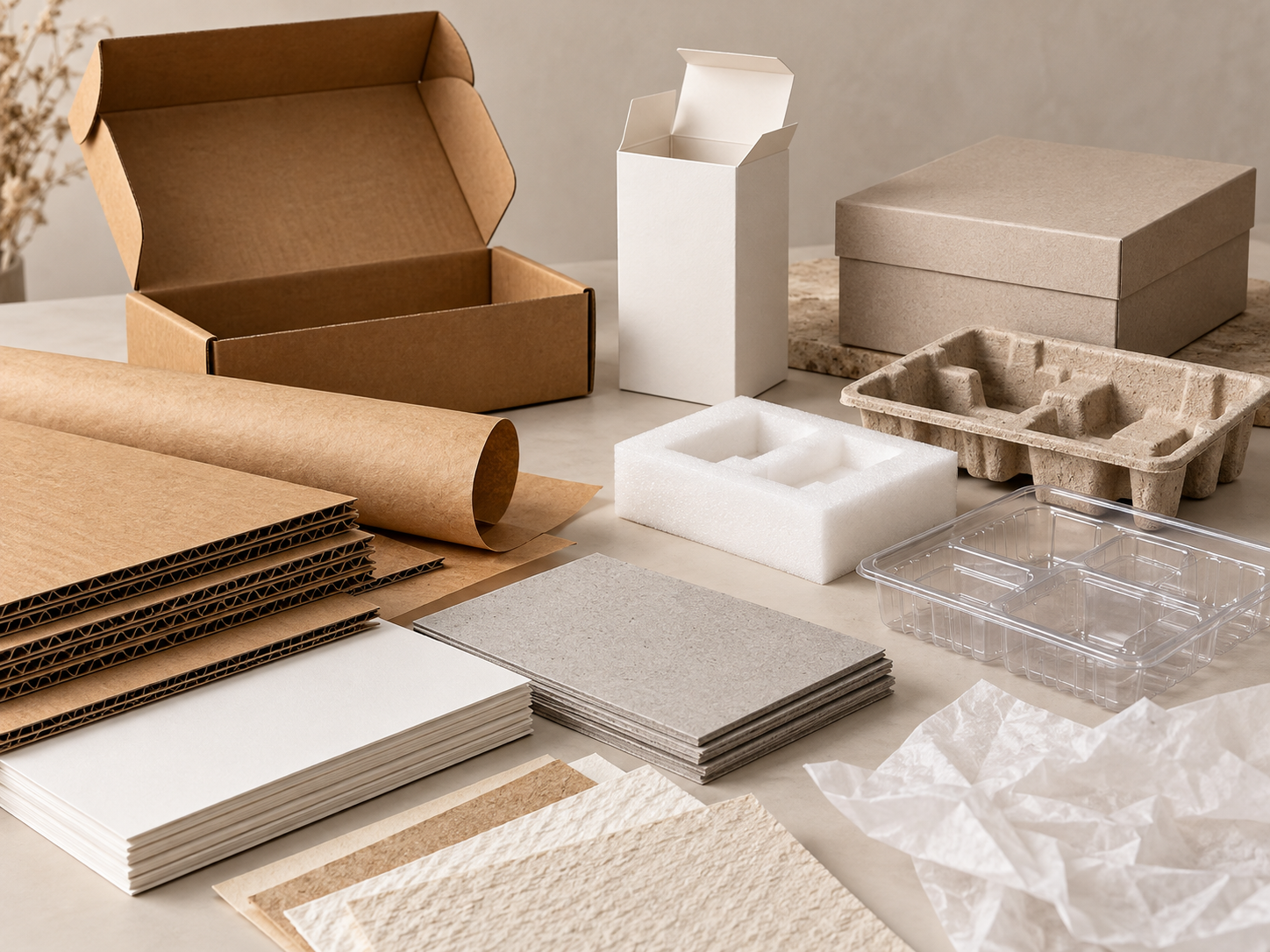
Common packaging materials used for packaging design include cardboard, paperboard, corrugated board, kraft paper, glass, metal, and plastic. Each packaging design material is suited to different strength, cost, appearance, protection, and sustainability needs. Packaging designers select materials based on the product, required durability, printing needs, transportation conditions, and intended presentation.
Packaging boxes have different properties and are suited to different packaging uses, as discussed below:
- Corrugated Board: A lightweight, rigid material with a fluted layer between flat liners, commonly used for shipping, e-commerce, and protective packaging.
- Paperboard: A smooth, printable material used for folding cartons such as food, cosmetic, and retail product boxes.
- Kraft Paper: A strong paper often recognised by its natural appearance. It is used for bags, wrapping, labels, and other paper-based packaging.
- Rigid Chipboard: A thick, rigid board usually wrapped with decorative paper. It is commonly used for premium gifts, presentations, and electronics boxes.
- Plastic: A versatile packaging material available in rigid forms such as PET, HDPE, and PP, as well as flexible films used for pouches, wraps, and protective packaging.
- Glass: A rigid, nonporous material used for bottles and jars, offering transparency and a premium appearance.
- Metal: Aluminium and steel provide strength and barrier protection and are commonly used for cans, tins, and containers.
- Moulded Pulp and Bio-materials: Emerging alternatives include moulded fibre, mycelium, seaweed-based materials, and plant-fibre blends.
What Printing and Finishing Techniques Are Used in Packaging?
Common packaging printing and finishing techniques used in packaging include flexographic and digital printing, offset printing, gravure, screen printing, matte and gloss lamination, embossing, debossing, foil stamping, and spot UV. These techniques help create consistent branding while adding visual contrast, texture, protection, or premium effects to the package.
- Offset Printing: Produces sharp images and accurate colour reproduction, making it suitable for detailed folding cartons and high-quality packaging.
- Flexographic Printing: Uses flexible printing plates for fast, high-volume production on materials such as corrugated board, films, and labels.
- Digital Printing: Prints directly from digital files, making it suitable for shorter runs, variable information, personalisation, and multiple designs.
- Gravure Printing: Uses engraved cylinders to deliver consistent, detailed results, particularly for long production runs and flexible packaging.
- Screen Printing: Applies relatively thick ink layers, creating bold, opaque graphics on materials such as glass, plastic, and metal.
Finishing techniques are processes applied to the surface of printed packaging after printing to improve its appearance, texture, durability, and visual impact.
Finishing techniques used in packaging are given below.
- Matte Lamination: A thin protective film with a smooth, non-reflective surface. It is used on packaging to reduce glare, protect printed surfaces from scuffs and moisture, and create a soft, understated appearance.
- Gloss Lamination: A clear film that creates a shiny, reflective surface. It is used on packaging to enhance colours and images while providing additional protection against handling and surface damage.
- Embossing: A finishing process that raises selected text, patterns, or graphics above the surface. It is used on packaging to give logos, product names, and decorative elements a noticeable three-dimensional texture.
- Debossing: The reverse of embossing, where a design is pressed below the surface. It is used to create recessed logos, patterns, or typography that add depth and tactile detail to packaging.
- Foil Stamping: A finishing technique that applies a thin metallic or speciality foil to selected areas of a package, creating reflective highlights on logos, text, borders, and decorative details.
- Spot UV: A finishing technique that applies a clear, high-gloss coating to selected areas of a package, creating contrast between glossy details and a matte or uncoated background.
How Does Brand Identity Influence Packaging Design?
Brand identity influences packaging design by determining which colours, materials, structures, and finishes are used so that every physical choice reflects the brand consistently. Custom packaging solutions design translates this identity into a physical form, allowing colours, logos, typography, and graphics to work together with the box structure and material.
Packaging materials and structures support the intended look and feel of the brand, while printing and finishing techniques strengthen its visual presentation. These elements work together rather than appearing as separate choices, creating a consistent appearance across different packaging formats.
Brand colours and visual elements help maintain recognition, while the choice of box style, material, and finish can reinforce the intended product presentation. A brand may use consistent colours and graphics across mailer boxes, folding cartons, and rigid boxes while adapting the structure to suit each product.
Packaging design therefore connects brand identity with materials, box structures, colours, graphics, printing, and finishes to maintain a consistent visual identity across products and customer touchpoints.
How Does Packaging Design Affect Consumer Psychology?
Packaging design affects consumer psychology by shaping first impressions and influencing how consumers perceive a product and its brand. Packaging influences consumer psychology through its colours, typography, imagery, materials, structure, and overall presentation. These elements can attract attention, support product recognition, and communicate the intended brand image, while consistent visual cues can strengthen brand perception, and packaging quality can influence perceived quality and trust.
Consumer perception develops through how packaging looks, feels, and communicates product information. Clear layouts help customers identify and understand the product, while distinctive visual elements strengthen recognition of the brand. These perceptions can influence purchase motivation when the packaging communicates qualities that align with the product and brand.
The unboxing experience extends this interaction beyond the initial purchase. Opening the package, handling its materials, and experiencing the product presentation can shape perceptions of the product and brand.
How Can I Research the Target Audience for Packaging Design?
Research the target audience for packaging design by analysing demographics, lifestyle preferences, buying habits, cultural influences, and customer feedback. These insights help identify the people most likely to purchase or use the product and determine which packaging features, styles, and visual elements are likely to appeal to them.
You can research your target audience through the following steps.
Build Packaging-Specific Buyer Profile
Identify more than basic demographics by analysing where, when, and how customers encounter the product. Consider whether they are making a planned purchase, an impulse purchase, a gift purchase, or buying for personal use, and assess their familiarity with the product category to determine how much information the packaging should provide.
Conduct Qualitative and Observational Research
Observe how customers interact with competitor packaging in retail environments or through online unboxing content. Interviews and focus groups can also reveal which colours, typography, imagery, shapes, information, and other packaging elements attract attention and influence perceptions.
Collect Quantitative Audience Insights
Use online surveys to gather measurable information about customer preferences, purchasing habits, values, and expectations. Quantitative research can help identify patterns across a larger target audience and support packaging decisions with customer data.
Test Packaging Concepts
Test early packaging concepts, colour schemes, layouts, and messaging with your target audience before finalising the design. Compare alternative designs against competitor packaging to identify how customers respond to different visual and informational elements.
How Does Packaging Communicate a Brand’s Story?
Packaging communicates a brand’s story through visual elements, materials, structure, and printed information that express what the brand represents. Brand storytelling can communicate the brand’s history, mission, values, and unique selling proposition (USP), helping customers understand both the product and the brand behind it.
Functional communication in packaging provides practical information such as the product name, features, instructions, and other relevant details. Emotional communication in packaging uses colours, imagery, typography, materials, and finishes to create associations with the brand and communicate its character, values, and positioning.
Packaging design brings these forms of communication together so that the package explains what the product is while also expressing what the brand stands for. Consistent visual and physical elements can then carry the same brand story across different products and customer touchpoints.
What Should a Packaging Strategy Include?
A packaging strategy should include clear goals, budget, timelines, product requirements, brand objectives, and operational considerations before design work begins. These elements define what the packaging needs to achieve, who it is designed for, and how it should support the product from production through to the customer.
Packaging requirements should cover the product’s dimensions, protection needs, materials, box structure, branding, and expected production quantities. Store placement, shelf display, and point of sale should also be considered so the packaging works effectively where customers see and interact with it.
These requirements can be organised through the Four Ps of packaging: Product, Price, Place, and Promotion, which connect packaging decisions with wider marketing and business objectives. Product addresses the item and its packaging requirements, price considers packaging and production costs, place covers distribution and retail conditions, and promotion focuses on how the packaging communicates the brand and presents the product.
You should also consider how these four Ps influence practical packaging requirements such as shipping, storage, handling, sustainability, production constraints, and customer experience.
What Are the Steps in the Packaging Design Process?
Packaging design typically follows nine steps, moving from initial research to final production. The exact process can vary depending on the product, packaging type, project requirements, and production constraints.
Here is the step-by-step packaging design process discussed below.
- Packaging Research: Identify the target audience, product requirements, market context, competitors, and packaging needs.
- Define Brand Strategy: Establish the brand identity, positioning, visual direction, and communication goals that the packaging should reflect.
- Develop a Packaging Brief: Establish the product dimensions, packaging objectives, materials, budget, quantity, and project timeline.
- Create the Structural Design: Determine the box style, dimensions, materials, construction, opening method, and functional requirements.
- Develop the Visual Concept: Define the packaging colours, typography, graphics, imagery, logo placement, and other visual elements.
- Create a Prototype: Produce a physical or digital version of the packaging to evaluate its dimensions, structure, appearance, and functionality.
- Test the Packaging: Evaluate the prototype for product fit, strength, protection, usability, handling, and other required conditions.
- Refine the Design: Use testing results and feedback to adjust the structure, dimensions, materials, graphics, or other packaging elements.
- Move to Production: Convert the approved packaging design into finished packaging through the selected manufacturing, printing, and finishing processes.
How Is Packaging Manufactured and Tested?
Packaging is manufactured by cutting, creasing, folding, and glueing the material into the required box structure, then tested through compression, drop, and stackability tests to check its performance. The packaging manufacturing process starts with die cutting, which shapes the material according to the approved structural design, while creasing creates fold lines that allow accurate bending. The material is then folded and glued to form the finished box, while manufacturing tolerances accommodate minor variations during production.
Packaging testing checks whether the finished box can protect the product during handling, storage, and transportation. Compression testing evaluates pressure resistance, drop testing checks response to impact, and stackability testing assesses stability when boxes are stacked.
Additional internal protection can then be provided through cushioning, inserts, and void fill, which control product movement and reduce the risk of damage inside the box. Final packaging checks confirm product fit, dimensions, closure, structural integrity, and overall performance before full production or distribution.
What Makes Packaging Design Sustainable?
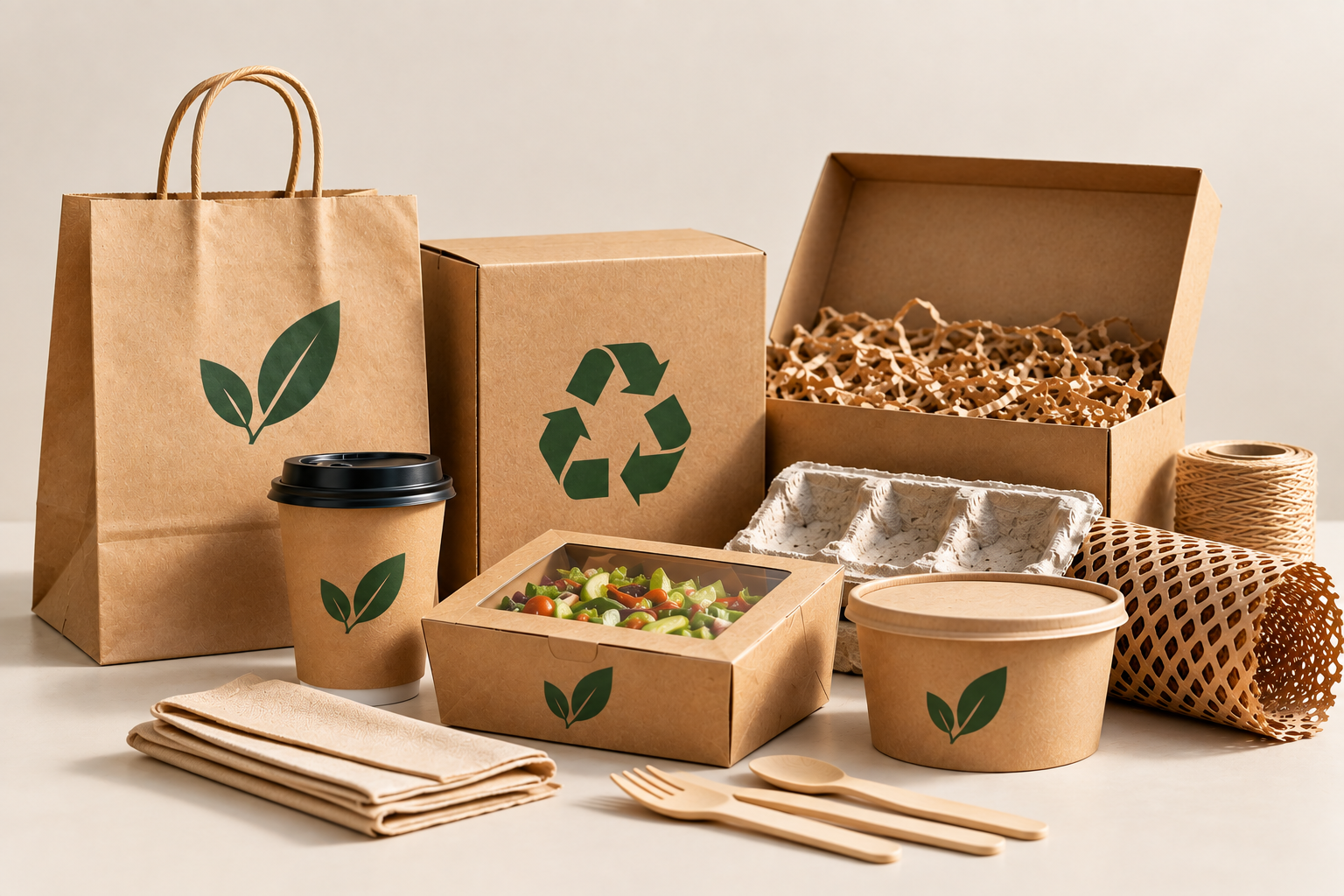
Packaging design becomes more sustainable by reducing environmental impact through material efficiency, responsible material selection, recyclability, reusability, and efficient transport. Material efficiency reduces unnecessary layers, excess space, and packaging weight while maintaining adequate product protection.
Packaging becomes more sustainable through the use of recycled, recyclable, renewable, or biodegradable materials that can reduce reliance on virgin and less sustainable resources. Recyclable and reusable packaging can further reduce packaging waste by extending material use and allowing packaging to enter established recycling or reuse systems.
Packaging design can improve sustainability through right-sizing and efficient structures that reduce unnecessary material use, packaging weight, storage space, and transport requirements. Efficient packaging design can also optimise material use and structural performance while maintaining the protection, functionality, and presentation required for the product.
Sustainable packaging therefore combines material selection, structural efficiency, product protection, logistics, and end-of-life considerations rather than relying on a single material or feature.
How Does Packaging Design Impact Business Outcomes?
Packaging design impacts business outcomes by affecting sales, production costs, shipping efficiency, and storage efficiency. Packaging influences how customers recognise and perceive a product, which can support brand recall and contribute to purchase decisions. Consistent branding, clear communication, and an appropriate presentation can strengthen the way a product is perceived at the point of purchase.
Packaging design also affects operational costs. Selecting suitable materials, box structures, and dimensions can help manage production costs while providing the required product protection. Right-sized packaging can reduce unnecessary material and unused space, which can support shipping efficiency and storage efficiency.
Packaging decisions therefore connect customer-facing outcomes with operational performance. A well-planned custom packaging manufacturer can support brand recognition and purchase consideration while also aligning dimensions, materials, and construction with production, storage, and shipping requirements.
What Are the Most Common Packaging Design Mistakes?
The most common mistakes brands make when designing packaging include weak visual hierarchy, cluttered graphics, poor typography, incorrect sizing, ignoring dielines and structural requirements, difficult opening mechanisms, limited differentiation, unsuitable material choices, and skipping prototyping. These issues can affect how clearly the packaging communicates, how well it protects the product, and how effectively it performs during production, shipping, and customer use.
The packaging design mistakes that can affect packaging effectiveness are outlined below.
Weak Visual Hierarchy: Failing to organise packaging elements clearly can make important product information difficult to notice and understand.
Cluttered Graphics: Using too many colours, fonts, images, or design elements can make the packaging look crowded and reduce visual clarity.
Poor Typography and Contrast: Difficult-to-read fonts or insufficient contrast can make product names, instructions, and other important information harder to read.
Low-Resolution Artwork: Using low-quality images or unsuitable artwork files can result in blurred graphics and poor print quality.
Ignoring Dielines: Designing without the approved dieline can cause artwork misalignment, incorrect panel placement, or graphics appearing across folds and closures.
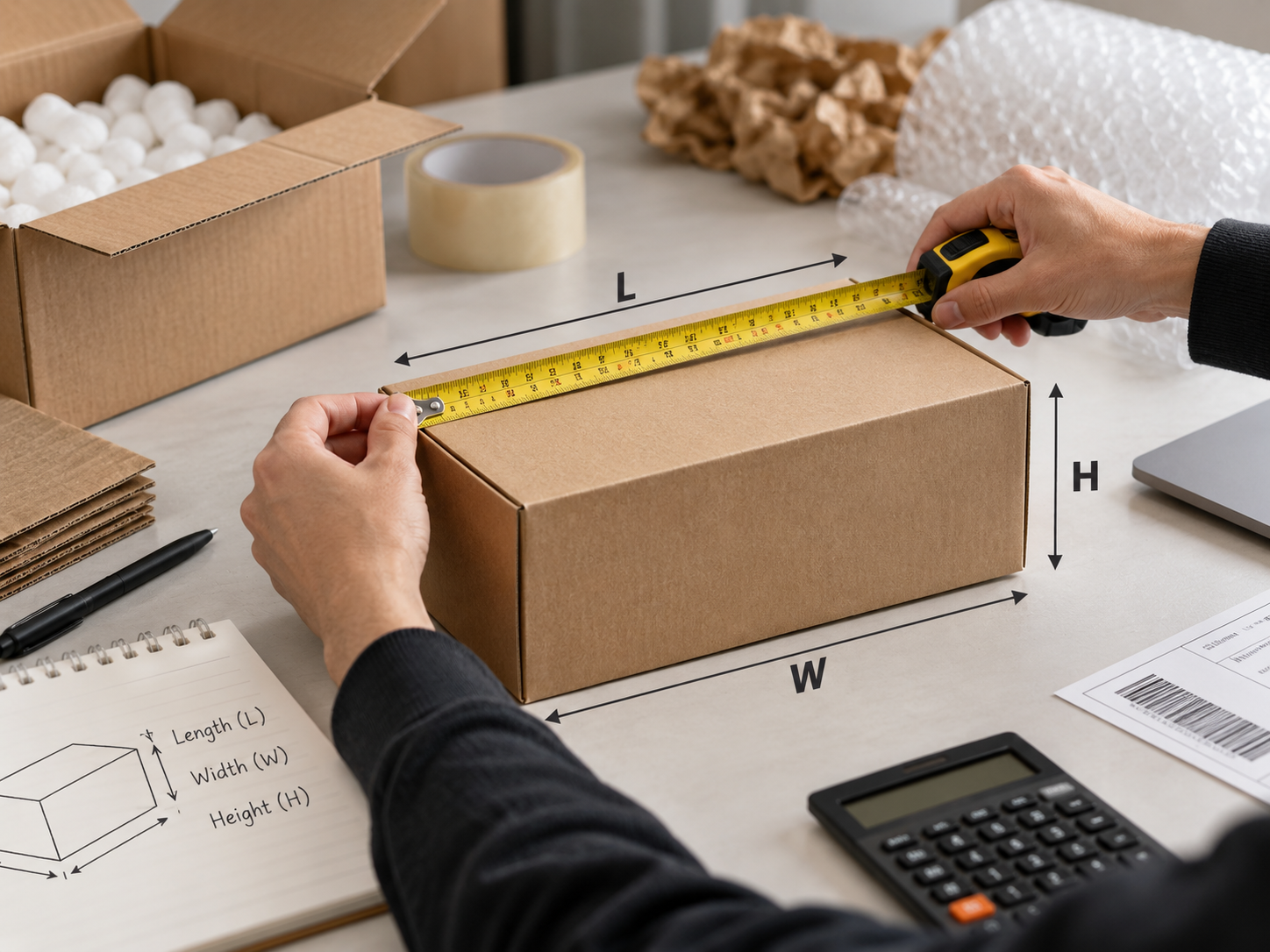
Poor Box Sizing: Selecting incorrect dimensions can create excessive space, increase material and shipping costs, or provide inadequate product protection.
Difficult Opening Mechanisms: Creating packaging that is unnecessarily difficult to open can negatively affect handling and the overall customer experience.
Lack of Differentiation: Creating packaging that closely resembles competing products can make the brand less distinctive and harder to recognise.
Unsuitable Material Selection: Choosing materials without considering product protection, packaging performance, sustainability, and production requirements can affect the finished package.
Skipping Prototyping: Moving directly to production without testing a physical prototype can allow structural, visual, sizing, and functional problems to reach the final packaging.
How Does Packaging Design Differ by Industry?
Packaging design varies by industry by adapting the structure, materials, dimensions, protection, visual elements, and finishes to each sector’s functional, regulatory, handling, branding, and customer requirements.
The following industries show how packaging design varies by sector.
FMCG (Fast-Moving Consumer Goods) Packaging: Prioritises shelf visibility, product identification, brand recognition, and efficient handling through clear graphics, colours, and information.
Food Packaging: Focuses on product protection, freshness, hygiene, clear information, and suitable materials that protect against moisture, air, light, and contamination.
Beverage Packaging: Emphasises durability, product protection, secure handling, and strong branding to withstand transportation and repeated handling.
Cosmetics and Beauty Packaging: Focuses on visual appeal, premium presentation, product protection, and customer experience through refined materials, structures, colours, and finishes.
Pharmaceutical and Healthcare Packaging: Prioritises safety, product protection, readability, and regulatory requirements, including dosage information, warnings, expiry dates, and tamper evidence where applicable.
Luxury Packaging: Emphasises premium materials, structural quality, refined finishes, and tactile presentation to support product positioning and perceived value.
E-commerce Packaging: Prioritises product protection, efficient sizing, secure closures, and shipping performance while reducing unnecessary space, weight, and material.
Retail Packaging: Balances shelf visibility, brand communication, product protection, information, and practical handling to support customer interaction.
Industrial and OEM (Original Equipment Manufacturer) Packaging: Focuses on structural strength, product protection, handling, and transport efficiency, often using heavy-duty corrugated packaging, protective inserts, or pallets.
Frequently Asked Questions
What Are the Four C’s of Packaging?
The four C’s of packaging are commonly described as Contain, Containment, Convenience, and Communication, although the exact framework can vary by source. These four C’s describe how packaging holds the product, protects it, provides practical use, and communicates product or brand information.
Are Packaging Design and Branding the Same Thing?
No, packaging design and branding are not the same thing. Branding defines the identity, positioning, and visual language of a brand, while packaging design applies those elements to the physical package. Packaging can therefore be one of the ways a brand identity is expressed.
Why Do Sources Describe the Packaging Design Process as Having 6, 7 or 9 Steps?
Sources describe the packaging design process as having 6, 7, or 9 steps because there is no single universal way to divide the process into stages. Different sources may combine related activities or separate them into individual stages, such as research, strategy, structural design, visual design, prototyping, testing, refinement, and production.
What’s the Difference Between Primary and Secondary Packaging?
Primary packaging directly contains or protects the product and forms the first packaging layer around it. Secondary packaging surrounds or groups one or more primary packages and provides additional protection, handling, branding, or presentation.
How Long Does It Typically Take to Design and Produce Custom Packaging?
The timeline varies according to the design complexity, packaging structure, material, prototyping, testing, printing, production quantity, and supplier. Simple packaging may require less development time than highly customised structural packaging.
How Much Does Professional Packaging Design Typically Cost?
Professional packaging design costs vary depending on the designer or agency, project complexity, structural requirements, number of concepts, revisions, and final deliverables. Production, materials, printing, tooling, and prototypes are typically separate cost considerations.
Do I Need a Professional Designer, or Can I Design My Own Packaging?
You can design your own packaging using available design tools, particularly for simple projects. A professional designer can be useful when the project involves structural design, print preparation, complex branding, packaging specifications, or production coordination.
What Software or Tools Are Commonly Used to Create Packaging Designs?
Packaging design commonly uses vector design, image editing, layout, and 3D mockup or prototyping tools. The appropriate software depends on whether you are creating artwork, structural dielines, mockups, or production-ready files.
Can a Packaging Design Be Legally Protected From Being Copied?
Yes, a packaging design can be legally protected depending on the design and the laws of the relevant jurisdiction. Intellectual property rights may protect packaging artwork, logos, trademarks, distinctive visual features, or certain structural designs. The appropriate form of protection depends on the specific packaging design, the type of intellectual property involved, and the markets where the packaging is used or sold.
Do Small Businesses Need Professional Packaging Design?
No, small businesses do not necessarily need a professional packaging designer for straightforward products. Professional design can be useful when packaging needs to balance brand identity, product protection, structural requirements, print production, customer experience, and regulatory information.