 Apparel Boxes
 Candle Boxes
 Bakery Boxes
 Cbd Boxes
 Medical Boxes
 Automotive Boxes
 Jewellery Boxes
 Cannabis Boxes
 Xmas Boxes
 Cosmetic Boxes
 Gift Boxes
 Hemp Boxes
 Vape Boxes
 Retail Boxes
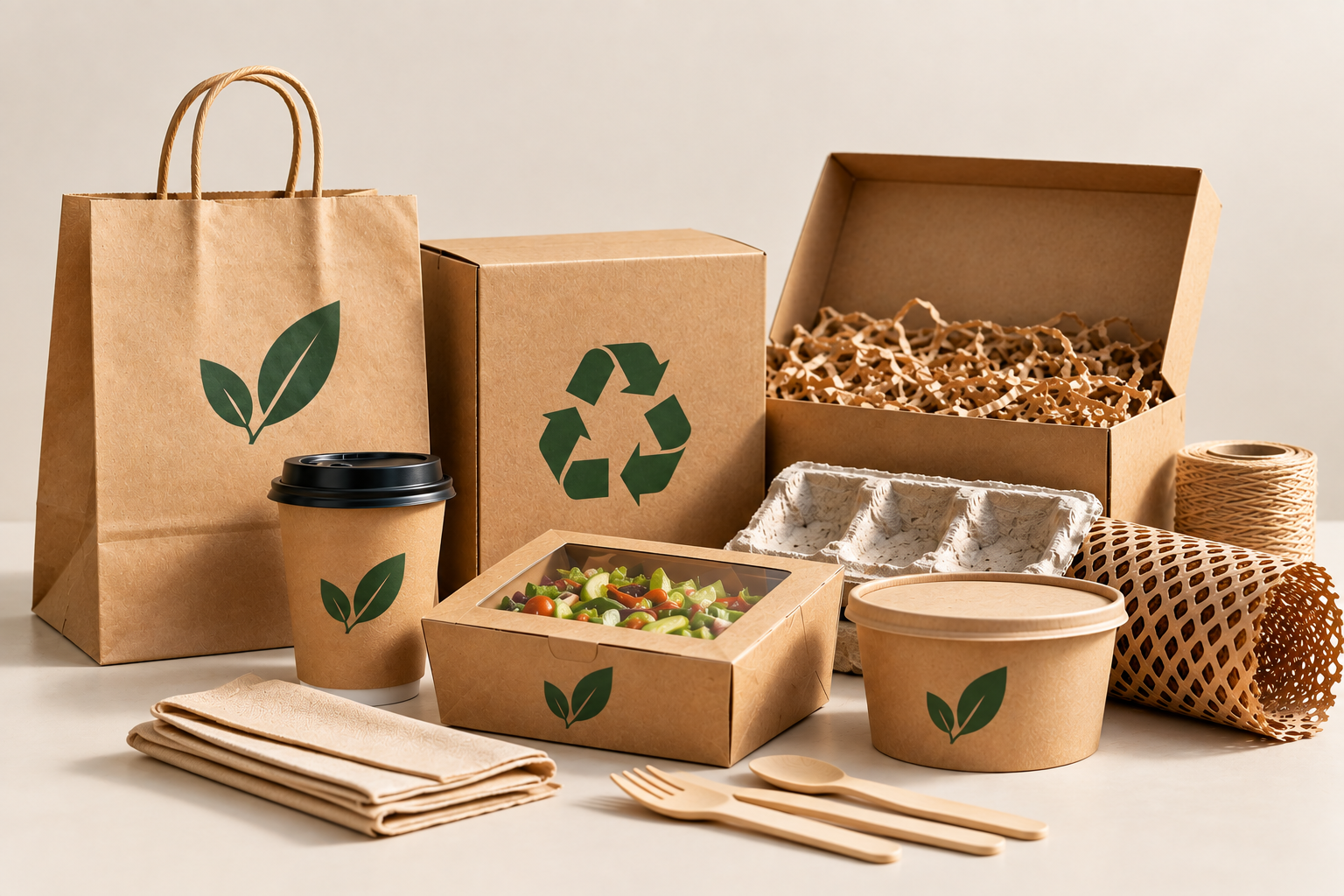
Sustainable packaging is packaging designed to reduce environmental impact across its life cycle while containing, protecting, preserving, transporting, and presenting products. The sustainability of packaging depends on the environmental impacts associated with material sourcing, manufacturing, transport, use, and end-of-life management. Sustainable packaging meets the product’s safety, durability, protection, and performance requirements.
Choosing sustainable packaging involves more than selecting a recyclable or biodegradable material. Businesses need to consider material efficiency, responsible sourcing, packaging design, transport efficiency, cost, product protection, and options for reuse, recycling, composting, or recovery. Right-sizing, lightweighting, material reduction, and designing for recycling can enhance packaging efficiency when they align with the product and existing infrastructure.
UK businesses also need to consider environmental claims, recognised certifications, and applicable packaging regulations, including Extended Producer Responsibility (EPR) and Plastic Packaging Tax (PPT). Considering these factors helps businesses evaluate packaging across its life cycle, select suitable materials and formats, and make evidence-based sustainability decisions.
What Is Sustainable Packaging?
Sustainable packaging is packaging designed to minimise environmental impact throughout its life cycle through efficient material use, responsible sourcing, effective product protection, and appropriate end-of-life management, while effectively containing, preserving, transporting, and presenting a product. Its core attributes include efficient material use, responsible sourcing, product protection, suitable reuse or recycling options, and appropriate end-of-life management.
These attributes influence packaging performance from material sourcing and manufacturing to transport, use, and end of life. Sustainable packaging uses recycled or recyclable materials, responsibly sourced renewable materials, reusable formats, or lightweight designs, depending on the product requirements and available infrastructure. Sustainable packaging has a design that minimises unnecessary material use and packaging waste while maintaining the required product protection, safety, and durability.
Sustainable packaging is defined by its overall life-cycle performance rather than by a single “green” material or attribute. For example, using paper, eliminating plastic, or choosing biodegradable, compostable, or recyclable packaging does not automatically make a package sustainable. Its sustainability depends on the material, design, product requirements, resource use, transport, and end-of-life options across the packaging life cycle.
What Makes Packaging Sustainable?
Packaging becomes sustainable when material selection, packaging design, and end-of-life management work together to reduce environmental impact while maintaining the product protection and performance required. The suitable custom sustainable packaging solutions depend on the product, protection requirements, packaging format, and available waste-management infrastructure.
- Select a suitable material: Choose materials such as recycled paper, corrugated fibreboard, and moulded pulp based on recycled content, responsible sourcing, resource efficiency, durability, product requirements, and manufacturing impacts, while providing the required functional performance with minimal resource use.
- Design the packaging efficiently: Use right-sizing, lightweighting, and component reduction to reduce material use while maintaining product protection. Design the packaging to support reuse, recycling, or composting where suitable collection and processing systems are available.
- Plan the end of life: Ensure that the packaging has a practical reuse, recycling, composting, or recovery pathway supported by suitable collection, sorting, and processing systems.
Sustainable vs Eco-Friendly Packaging
The main difference between sustainable and eco-friendly packaging is that sustainable packaging considers environmental performance across the entire packaging life cycle, while eco-friendly packaging generally refers to packaging designed to reduce environmental impact in one or more areas. Sustainable packaging considers material sourcing, production, transport, product protection, use, and end-of-life management, while eco-friendly packaging may focus on factors such as material use, recycled content, or renewable materials.
Green packaging is another general term for packaging described as having environmental benefits rather than a defined packaging category. Sustainable, eco-friendly, and green packaging can describe the same packaging when its material, design, product requirements, and end-of-life options are appropriate for the application. However, describing packaging as eco-friendly or green does not by itself demonstrate lower environmental impact across its life cycle.
Recyclable vs Biodegradable vs Compostable vs Reusable Packaging
Recyclable, biodegradable, compostable, and reusable packaging have different end-of-use properties, including material recovery, biological breakdown, composting, and repeated use. These properties determine how each type is treated after use: recyclable packaging recovers material through recycling, biodegradable packaging breaks down through biological processes, compostable packaging breaks down under defined composting conditions, and reusable packaging is used repeatedly rather than discarded after one use.
The table below explains how each packaging type differs in definition, key attribute, and end-of-use requirements.
| Attribute | Recyclable Packaging | Biodegradable Packaging | Compostable Packaging | Reusable Packaging |
| Definition | Packaging that can be collected, sorted, and reprocessed into new material through an appropriate recycling system. | Packaging that can break down through biological processes by microorganisms under suitable environmental conditions. | Packaging that can biodegrade under specified composting conditions and meet requirements for compostable outputs. | Packaging intended for repeated use for the same or a similar purpose rather than disposal after one use. |
| Primary process | Collection, sorting, and material reprocessing | Biological breakdown by microorganisms | Biological breakdown during composting | Return, cleaning, refilling, and repeated use |
| End-of-use outcome | Recovered material that can be used to make new products | Biological breakdown into simpler substances under suitable conditions | Compostable outputs under specified composting conditions | Continued use before eventual disposal or recovery |
| Required conditions | Suitable collection, sorting, and recycling processes | Suitable environmental conditions and microorganisms | Specified composting conditions | A practical system for return, cleaning, refilling, or reuse |
| Infrastructure | Collection, sorting, and recycling facilities | Depends on the environmental conditions required for biological breakdown | Suitable composting collection and processing facilities | Return, cleaning, refilling, and redistribution systems |
| Key distinction | Being recyclable does not guarantee that packaging will be recycled because recovery depends on design and available recycling systems. | Biodegradability does not specify how quickly or under what conditions breakdown occurs, so it does not automatically mean compostable. | Compostability requires the packaging to meet defined conditions for composting and does not necessarily mean it can be composted at home. | Reusability depends on durable packaging and a system that enables the packaging to be used repeatedly. |
These properties can overlap but are not interchangeable. The suitability of recyclable, biodegradable, compostable, or reusable packaging depends on the material, product requirements, packaging design, intended use, reuse system, and available waste management infrastructure. Environmental claims should be supported by appropriate evidence and, where applicable, recognised standards or certifications.
What Should You Not Assume About Sustainable Packaging?
You should not assume that packaging is sustainable simply because it uses a particular material, carries an environmental label, or has a specific packaging format. Sustainable packaging depends on its overall life-cycle performance, including material sourcing, production, transport, product protection, use, and end-of-life management.
- One material is automatically better: Choosing paper, cardboard, bio-based, or plastic-free packaging does not automatically reduce environmental impact, as the outcome depends on the material, design, product requirements, and end-of-life options.
- Replacing plastic always reduces environmental impact: An alternative must provide the required product protection while offering appropriate environmental performance across its life cycle.
- Transport does not matter: Packaging weight, volume, sourcing, and transport requirements can affect environmental performance, so material selection should also consider storage and distribution.
- End of life can be ignored: Recyclability, reusability, and compostability depend on the appropriate collection, sorting, processing, return, reuse, or composting systems.
Why Does Sustainable Packaging Matter for UK Business?
Sustainable packaging matters to UK businesses because it can reduce unnecessary material use, packaging waste, transport requirements, and environmental impacts while improving packaging efficiency and supporting applicable packaging requirements. These factors affect how businesses source, produce, design, transport, use, and manage packaging after use. Understanding these factors helps businesses choose packaging that meets product requirements while reducing unnecessary environmental impacts.
Environmental Impact
Sustainable packaging helps businesses reduce environmental impacts through efficient material use, lower packaging weight and waste, and suitable end-of-life options while protecting products effectively. Its environmental performance depends on factors across the packaging life cycle, from material sourcing and production to transport, use, and end of life.
- Resource use: The amount and type of material, sourcing methods, energy use, and manufacturing processes affect resource consumption.
- Carbon emissions: Packaging weight, volume, production, and transport can influence greenhouse gas emissions.
- Packaging waste: After use, packaging may be reused, recycled, recovered, or disposed of depending on its design and available waste-management systems.
- Product protection: Packaging helps protect products from damage, contamination, and spoilage, so using less packaging is not beneficial if it leads to more product waste.
Business Benefits
Sustainable packaging helps UK businesses reduce material use and packaging costs, use warehouse and transport space more efficiently, communicate environmental priorities, and improve customer experience. The benefits vary according to the packaging design, product requirements, business model, and packaging choices.
- Cost and material efficiency: Right-sizing, lightweighting, and removing unnecessary components can reduce material use and packaging costs while maintaining product protection.
- Shipping and storage: Smaller and lighter packaging can use warehouse and transport space more efficiently, which can help reduce handling and distribution requirements.
- Brand communication: Sustainable packaging can communicate a business’s environmental priorities and strengthen brand perception when environmental claims are accurate and evidence-based.
- Customer experience: Packaging that reduces unnecessary material and meets customer expectations around sustainability can create a better customer experience and support customer loyalty.
Problems With Conventional Packaging
Conventional packaging can create environmental and waste-management challenges when it uses unnecessary material, is difficult to recover, or lacks a suitable end-of-life route. Some plastic packaging can be harder to collect, sort, and recycle because of its format, material composition, contamination, or limited processing infrastructure.
However, plastic packaging is not automatically more harmful than other materials. Lightweight plastic can reduce material use, packaging weight, and transport requirements, while complex or multi-material packaging can create greater recycling and end-of-life challenges. The environmental performance of packaging therefore depends on how well its material, design, product protection, transport efficiency, and end-of-life management work together.
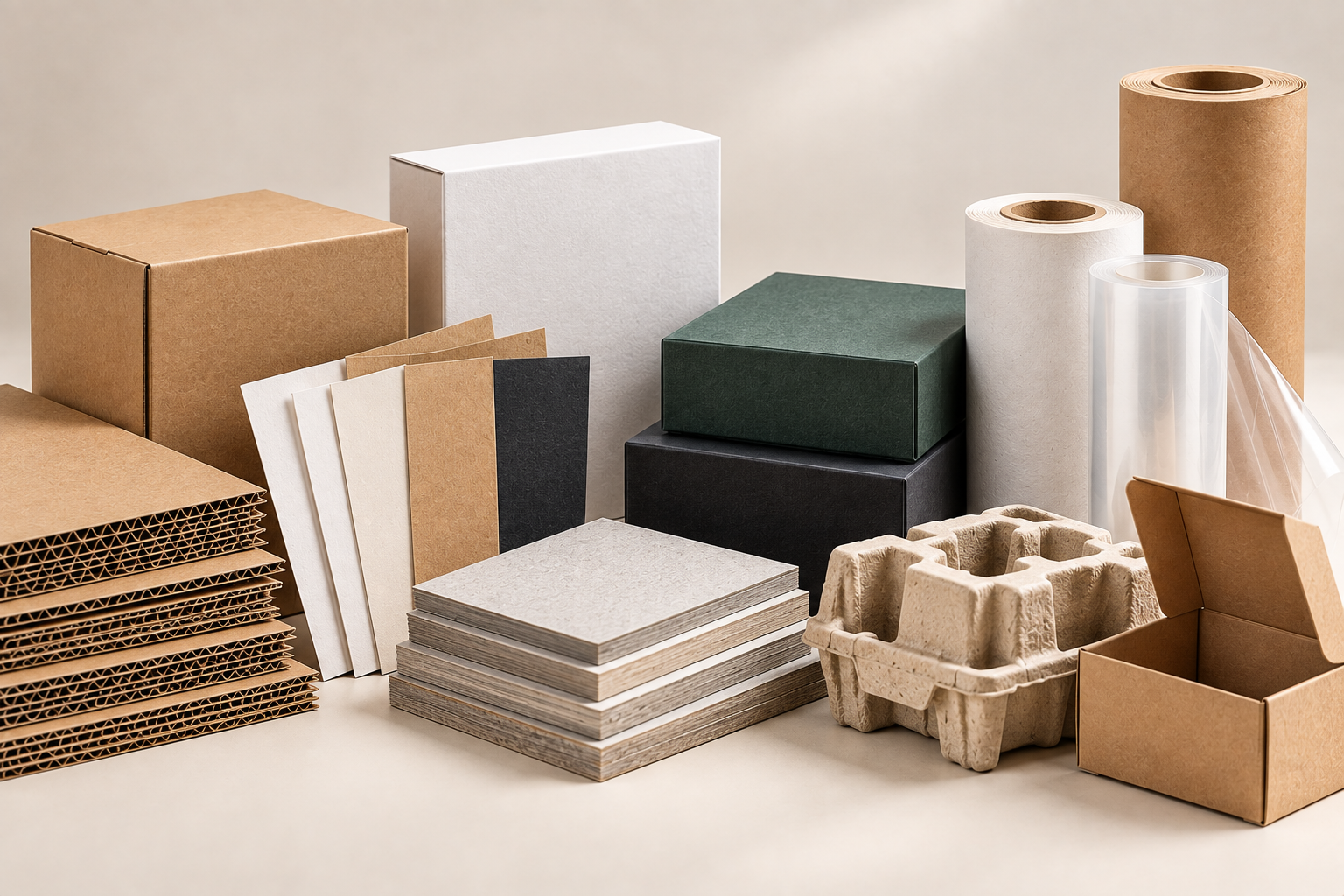
What are Common Sustainable Packaging Materials?
Which sustainable packaging material should you use? The right choice depends on the product, protection requirements, packaging format, material sourcing, resource efficiency, durability, recyclability or compostability, reuse potential, available recovery systems, and cost. The table below compares common packaging materials and their typical characteristics to help UK businesses identify suitable options for different applications.
The following materials support sustainable packaging strategies when their properties, design, sourcing, use, and end-of-life options are suitable for the application.
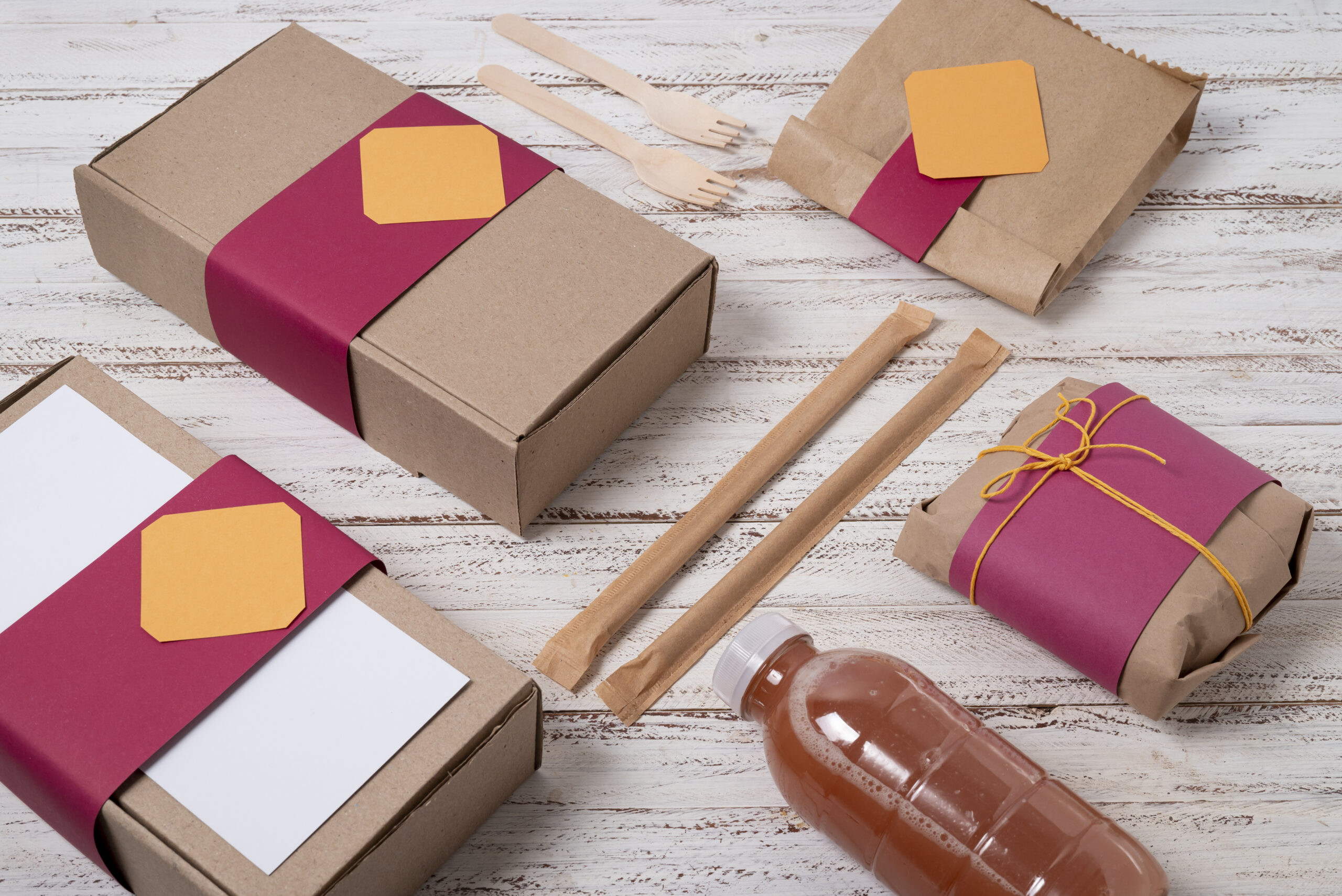
Cardboard Packaging
Cardboard packaging is a paper-based board made from virgin or recycled fibre and used to make custom cardboard packaging, cartons, and sleeves for retail, food, cosmetics, and e-commerce products. Its board grade, thickness, fibre content, and design influence material efficiency, protection, and overall packaging performance, while moisture resistance, coatings, and composite materials affect its suitability for different applications.
Cardboard is generally recyclable where kerbside collection or commercial recycling exists, although coatings and composite structures can make recovery difficult. Cost depends on the board grade, thickness, size, coatings, and order volume, so businesses choose cardboard that meets product requirements, uses materials efficiently, and offers a practical end-of-life route.
Kraft Paper Packaging
Kraft paper packaging is a strong paper-based material made from wood fibre and used for bags, wraps, pouches, and protective packaging. Its grade, thickness, strength, and flexibility affect product protection and material efficiency, while the moisture and grease resistance of kraft paper packaging depends on its construction and coatings. These properties make kraft paper suitable for retail, food, and e-commerce products.
Uncoated kraft paper is generally recyclable through commercial recycling or paper-mill recycling routes where kraft paper is accepted, although coatings can affect recovery. Businesses should select kraft paper based on product requirements, protection needs, material efficiency, cost, and available end-of-life options. Cost varies with grade, thickness, coatings, packaging size, fibre content, and order volume.
Recycled Paper Packaging
Recycled paper packaging is made from paper or paperboard containing recovered fibre and used for cartons, bags, wraps, and inserts. Its grade, thickness, fibre content, and construction affect material efficiency and product protection, while coatings can affect moisture resistance and recyclability.
Recycled paper is generally recyclable through kerbside collection, commercial recycling, or paper-mill routes where accepted, although contamination, fibre quality, and coatings can affect recovery. Choose recycled paper based on product requirements, protection needs, material efficiency, cost, and end-of-life options. Cost varies with grade, thickness, fibre content, coatings, packaging size, and order volume.
Moulded Pulp Packaging
Moulded pulp packaging is three-dimensional packaging made from paper or plant fibres and formed into trays, inserts, and protective components. Its fibre type, wall thickness, and moulded structure determine its strength, protection, and material efficiency, making it suitable for electronics, food, cosmetics, and other consumer products.
Moulded pulp has limited moisture resistance, so moisture-sensitive products may require coatings or barrier treatments. Complex shapes may require specialised moulding and tooling, which can increase production costs. Businesses should evaluate the product, required protection, design complexity, material use, and cost to select a suitable moulded pulp solution. Moulded pulp can be recycled through kerbside collection, commercial recycling, or paper-mill routes where accepted. Its compostability depends on its composition, coatings, additives, and applicable composting requirements.
Mycelium Packaging
Mycelium packaging is protective packaging made by growing fungal mycelium around a fibre-based substrate within a mould, and manufacturers use it for inserts, cushioning, and shaped protective packaging. The density, structure, and design of mycelium packaging determine the strength and protective performance. Its moulded structure can provide the required protection with efficient material use, while the substrate type and availability affect material selection and sourcing.
Mycelium packaging can biodegrade under conditions that support microbial activity, but it is not generally recyclable through conventional paper or plastic recycling systems. Moisture sensitivity, production scalability, consistency, and cost can affect its suitability for different products, protection requirements, and business needs.
Seaweed Packaging
Seaweed packaging is biofabricated packaging made from seaweed or seaweed-derived materials that are processed into films, sheets, coatings, and other packaging formats. The formulation determines the packaging’s strength, moisture resistance, and durability to meet the protection requirements of the product. These properties make it suitable for takeaway and food-wrapping applications, while material availability and production scalability influence its sourcing and manufacture.
Limited durability, moisture resistance, production scalability, and high costs of seaweed packaging restrict its use for some products and business requirements. Some formats are biodegradable or compostable under suitable composting conditions, but this does not make them automatically recyclable through conventional recycling systems.
Bioplastic Packaging
Bioplastic packaging is packaging made from bio-based, biodegradable, or both types of plastics and used to make films, containers, trays, and other packaging formats. Bio-based plastics use biological feedstocks, while biodegradable plastics can break down through biological processes under suitable conditions. The polymer, formulation, and design influence strength, moisture and oxygen resistance, durability, and material efficiency, affecting its protection and suitability for different products.
Feedstock availability affects material sourcing, while processing requirements influence production and cost, which can affect its suitability for different business needs. At end of life, the recyclability of bioplastic packaging depends on local collection and recycling systems, while compostability depends on the required temperature, moisture, oxygen, and microbial conditions. Businesses therefore consider product needs, protection, efficient material use, sourcing, cost, and available end-of-life options when selecting bioplastic packaging.
Recycled Plastic Packaging
Recycled plastic packaging is packaging made from recovered plastic that is collected, sorted, cleaned, and reprocessed into new packaging for bottles, containers, films, and other formats. Its polymer, recycled content, and packaging design influence its strength, durability, barrier performance, and material efficiency.
Recycled plastic packaging can be recycled again through polymer-specific mechanical recycling systems where the plastic is collected and accepted, although contamination and material quality can affect recovery. They are not automatically biodegradable or compostable, as these properties depend on the plastic composition and required biological or composting conditions. The cost of recycled plastic packaging varies with the polymer, recycled content, packaging format, and order requirements, so businesses choose recycled plastic that meets product and protection needs, uses materials efficiently, fits the budget, and has a practical end-of-life route.
Glass Packaging
Glass packaging is rigid packaging made from glass and used to make bottles, jars, and containers for food, beverages, cosmetics, and other products. Its inert nature, strength, and barrier properties protect products from moisture, gases, and chemical interaction, while its weight and fragility affect material efficiency, transport, and suitability for different applications.
Glass is generally recyclable through glass collection and processing systems, while reusable formats require return, cleaning, and refilling systems. Its high weight and fragility can increase transport requirements and breakage risk, while cost varies with the glass type, packaging format, and production requirements. Businesses choose glass packaging based on product and protection requirements, material efficiency, cost, and production needs.
How to Choose Sustainable Packaging for Your Product
To choose sustainable packaging for your product, start by assessing the product and its protection needs, then consider transport, material efficiency, cost, and end-of-life options. Businesses can also explore custom packaging solutions for UK businesses to find packaging suited to their product requirements.
Follow these steps to choose the right packaging for your product.
- Identify the product: Assess its weight, shape, fragility, moisture sensitivity, and other characteristics to determine its packaging requirements.
- Define the protection required: Choose a packaging format that provides the necessary strength, cushioning, containment, and barrier protection. Right-sizing and lightweighting can reduce material use without compromising protection.
- Assess transport requirements: Consider the transport conditions, package size, weight, stacking strength, and durability to ensure the packaging withstands handling, storage, and transport.
- Check end-of-life options: Confirm a realistic route for reuse, recycling, or composting through available collection and processing systems. Technical recyclability or compostability does not guarantee access to these systems.
- Choose the material: Compare suitable materials based on performance, material efficiency, recycled or renewable content, cost, and end-of-life options. Select the material that meets the product’s requirements and provides a practical end-of-life route.
What Are the Sustainable Packaging Design Strategies?
Sustainable packaging design strategies include right-sizing, lightweighting, mono-material design, and design for recycling. These approaches reduce unnecessary material and packaging waste while maintaining the protection and performance required by the product.
The following strategies can be used to improve packaging design and sustainability.
- Right-sizing: Match packaging dimensions to the product’s size and shape to reduce empty space, packaging volume, and unnecessary material. The required size depends on the product, protection requirements, and packaging format.
- Lightweighting: Reduce packaging weight or material quantity while maintaining the required strength and product protection. Thinner materials, smaller components, and fewer unnecessary parts can reduce material use, but excessive lightweighting can compromise protection.
- Mono-material design: Use one primary material or compatible materials to simplify packaging construction and support sorting and recycling where suitable systems exist. This approach is commonly used for films, pouches, and containers.
- Design for recycling: Use recyclable materials compatible with established recycling processes and minimise mixed materials, coatings, and components that can hinder sorting and recycling. Actual recyclability depends on the design and available recycling infrastructure.
How to Make E-commerce Packaging More Sustainable?
Use custom e-commerce packaging boxes for products requiring greater structure, cushioning, or impact protection, while selecting the format according to the product and its protection requirements.
The following strategies make e-commerce packaging more sustainable.
- Choose the right shipping format: Use mailers for lightweight, flexible, or durable products and boxes for products requiring greater structure, cushioning, or impact protection. The product and its protection requirements determine the suitable format.
- Minimise void fill: Use a suitably sized package and only enough protective material to prevent movement and damage, reducing unnecessary material and parcel volume without compromising protection.
- Control package dimensions: Right-size the package to the product because large, lightweight parcels can incur higher shipping costs when carriers calculate dimensional weight from parcel volume. Suitable dimensions can reduce shipping space and transport costs.
- Design for returns: Use easy-open and resealable packaging where appropriate so customers can reuse the original package for returns. This can reduce additional packaging and support reverse logistics.

Lifecycle Assessment: How to Evaluate Packaging Sustainability
A Life Cycle Assessment (LCA) is a standardised scientific method used to evaluate the environmental impacts of packaging across its entire life cycle, from raw material extraction and manufacturing to transport, use, and end of life. Reviewing these stages together provides a complete understanding of packaging’s overall environmental performance.
Evaluate each life-cycle stage to understand its contribution to the packaging’s overall environmental impact.
- Raw materials: Consider the material type, quantity, source, and recycled or renewable content to understand resource use and the environmental impacts associated with obtaining packaging materials.
- Manufacturing: Review energy and water use, processing requirements, emissions, and production waste to understand the impacts of converting raw materials into packaging. Material quantity and packaging design also influence resource and production requirements.
- Transport: Examine packaging weight, dimensions, and volume to understand the space and weight transported across the supply chain. Lightweight and right-sized packaging reduce unnecessary transport requirements.
- Use: Consider the strength, containment, and barrier performance needed to protect the product during handling, storage, and use. Inadequate protection can cause damage, contamination, or spoilage, increasing overall environmental impacts.
- End of life: Determine the realistic route for reuse, recycling, composting, recovery, or disposal based on the packaging’s material composition, design, contamination, and available collection, sorting, and processing infrastructure.
Sustainable Packaging Certifications & Claims
Sustainable packaging certifications, including FSC, PEFC, and recycled content, verify that specific materials, products, or processes meet defined requirements under the relevant certification or assessment scheme. Environmental claims, such as ‘recyclable’, ‘compostable’, and ‘biodegradable’, communicate specific environmental attributes that require appropriate evidence. These certifications and claims address particular aspects of packaging rather than proving overall sustainability, which also depends on material choice, design, product protection, resource use, life-cycle impacts, and realistic end-of-life management.
Certifications
- FSC (Forest Stewardship Council): FSC certification verifies responsible forestry and supply-chain traceability for forest-based materials such as paper, cardboard, and kraft paper. It applies to the certified material or supply chain, not automatically to the entire package.
- PEFC (Programme for the Endorsement of Forest Certification): PEFC certification verifies sustainable forest management or chain of custody for forest-based materials used in paper and board packaging. It does not establish the overall sustainability of the finished package.
- Recycled-content certification or verification: This verifies that packaging contains a specified amount or proportion of recycled material, which may include pre-consumer or post-consumer recycled content according to the applicable scheme or standard.
- Compostability certification: This verifies that suitable packaging meets defined requirements for biodegradation, disintegration, and other compostability criteria under specified test conditions. Certification does not mean the packaging can be composted through every waste-management system.
Claims
- Recyclable: A recyclable claim indicates that packaging can be recovered and processed through an appropriate recycling system. Actual recycling depends on its construction, collection, sorting, processing infrastructure, and local waste-management systems.
- Compostable: A compostable claim indicates that packaging can biodegrade and disintegrate under specified composting conditions. Some packaging requires commercial or industrial composting rather than home composting.
- Biodegradable: A biodegradable claim indicates that a material can break down through biological processes under suitable conditions. The claim alone does not define the conditions, timescale, or compostability of the material.
- Carbon-neutral: A carbon-neutral claim relates to the greenhouse-gas emissions within a defined product, activity, or organisational boundary and should be supported by an appropriate emissions-accounting approach and evidence. It does not indicate whether packaging is recyclable, compostable, or made from renewable materials.
What are the UK Packaging Regulations & Compliance Requirements?
UK packaging regulations, including EPR and PPT, are legal requirements that govern how businesses manufacture, import, supply, and manage packaging, including producer responsibility, packaging data reporting, recycling obligations, and applicable taxes. For sustainable packaging, the main requirements are Extended Producer Responsibility (EPR) and Plastic Packaging Tax (PPT). The obligations that apply depend on the business’s packaging activities, turnover, packaging quantity, material, recycled content, and location within the UK.
Extended Producer Responsibility (EPR)
Extended Producer Responsibility (EPR) requires obligated businesses to register and report packaging data, meet recycling obligations, and pay applicable fees for packaging they supply or import. Obligations depend on the business’s UK establishment, packaging activities, annual worldwide turnover, and packaging volume. Current thresholds include more than £1 million annual turnover and more than 25 tonnes of packaging, with requirements varying by producer type.
Plastic Packaging Tax (PPT)
The Plastic Packaging Tax (PPT) applies to finished plastic packaging that is either manufactured in or imported into the UK and contains less than 30% recycled plastic, after considering applicable exemptions and exclusions. Businesses that manufacture or import 10 tonnes or more of finished plastic packaging within the relevant period may need to register for Plastic Packaging Tax. The Plastic Packaging Tax rate is £228.82 per tonne from 1 April 2026 for taxable plastic packaging containing less than 30% recycled plastic. Businesses that manufacture or import 10 tonnes or more of finished plastic packaging during the relevant period must register for PPT if they meet the applicable registration requirements.
What Sustainable Packaging Solutions Are Used in Different Industries?
Sustainable packaging solutions used across e-commerce, cosmetics, fashion, electronics, retail, and subscription boxes include corrugated boxes, paper mailers, paperboard, recycled plastics, moulded pulp inserts, refillable formats, and reusable packaging. The appropriate solution depends on the product, protection requirements, packaging format, material efficiency, and available end-of-life options.
The following examples highlight common packaging solutions used across these industries.
- E-commerce: Right-sized corrugated boxes and paper mailers protect products during handling, storage, and delivery while reducing excess material and unnecessary parcel volume.
- Cosmetics: Paperboard, glass, aluminium, recycled plastics, and refillable formats provide product protection while supporting presentation, branding, and efficient material use.
- Fashion: Mailers, garment bags, boxes, tissue paper, and tags made with recycled or recyclable materials, reusable formats, and recycled content help reduce virgin material use.
- Electronics: Corrugated packaging, moulded pulp inserts, and paper-based protective materials protect products from impact, movement, moisture, and static electricity where required.
- Retail: Cardboard, paperboard, recycled-content materials, and reusable packaging provide product protection while supporting shelf presentation, branding, and material efficiency.
- Subscription boxes: Right-sized corrugated boxes, paper-based inserts, and recycled tissue paper protect multiple products while reducing excess material and maintaining the unboxing experience.
What Are the Most Common Sustainable Packaging Mistakes?
Common sustainable packaging mistakes include using excessive material, inefficient packaging formats, unsuitable end-of-life solutions, and unsupported environmental claims. These mistakes can increase material use, transport impacts, waste, or the risk of misleading environmental claims.
Businesses should avoid the following mistakes when selecting, designing, and managing sustainable packaging.
- Confusing biodegradable with recyclable: Biodegradable packaging breaks down through biological processes under suitable conditions, while recyclable packaging is designed for material recovery. These are different end-of-life properties.
- Using too much packaging: Overpackaging increases material use, packaging weight, and packaging waste without necessarily improving product protection.
- Ignoring shipping efficiency: Oversized or unnecessarily heavy packaging can increase transport space, package weight, and delivery impacts, even when the packaging is recyclable.
- Overlooking end-of-life infrastructure: Technically recyclable or compostable packaging may not have a practical recovery route where suitable collection, sorting, or processing systems are unavailable.
- Making unsupported environmental claims: Claims such as “eco-friendly”, “green”, “sustainable”, and “biodegradable” should be supported by appropriate evidence to avoid misleading customers and creating compliance risks.
Real-World Sustainable Packaging Examples
The following examples show documented packaging changes made by businesses to reduce plastic use, replace conventional packaging materials, or introduce reusable formats.
- HP – Replacing plastic foam with moulded pulp: HP transitioned packaging cushions for notebooks, desktops, and displays from plastic foam to 100% recycled moulded pulp, eliminating 933 tonnes of hard-to-recycle expanded plastic foam in 2019.
- IKEA – Replacing plastic fitting bags with paper: IKEA Components began replacing plastic bags used for screws, bolts, and other furniture fittings with paper-based bags. The change is expected to reduce virgin plastic consumption by approximately 1,400 tonnes annually.
- Dove – Introducing refillable deodorant packaging: Dove introduced a refillable stainless-steel deodorant case designed for repeated use. Its refill packaging contains 98% recycled plastic and uses 54% less plastic than a regular stick pack.
What Should You Check Before Ordering Sustainable Packaging?
Before ordering sustainable packaging, check the material, dimensions, product protection, void space, shipping requirements, costs, end-of-life options, and environmental claims. These checks help ensure the packaging meets product and business requirements without adding unnecessary material or costs.
Review these factors to identify key packaging requirements before ordering.
- Check the dimensions: Measure the product and select a package that fits closely enough to provide the required protection without creating unnecessary empty space.
- Choose the material: Select a material that provides the required strength, weight, durability, and barrier performance while offering suitable recyclability or recycled content for the intended application.
- Measure void space: Check the unused space inside the package and reduce it where possible through right-sizing without compromising product protection.
- Review the damage rate: Compare packaging changes with product damage rates to ensure that reducing material or package size does not increase damage during handling, storage, or delivery.
- Calculate shipping costs: Compare package dimensions and weight because larger or heavier packaging can increase storage requirements and transport or delivery costs.
- Check end-of-life options: Confirm how the packaging will be managed after use, including whether suitable reuse, recycling, or other recovery systems are available.
- Verify environmental claims: Check the evidence behind claims such as “recyclable”, “compostable”, or “recycled content” to ensure they accurately describe the packaging and meet applicable requirements.
Frequently Asked Questions
Why Is Sustainable Packaging Important?
Sustainable packaging is important because it can reduce material use, packaging waste, resource consumption, and environmental impacts while maintaining product protection. Right-sizing, lightweighting, recycled content, and suitable end-of-life options can improve packaging efficiency when they match the product and available waste-management infrastructure.
What Is the Most Sustainable Packaging Material?
The most sustainable packaging materials are paperboard, corrugated cardboard, recycled plastics, glass, and metal cans, all of which suit the product and its packaging requirements. The appropriate choice depends on material use, recycled content, weight, durability, product protection, recyclability, and available end-of-life options.
Is Cardboard Sustainable?
Yes, cardboard is a sustainable packaging option when it is responsibly sourced, efficiently designed, and supported by suitable recycling systems. Recycled or responsibly sourced fibre can reduce virgin material use, while right-sizing and lightweighting can improve material efficiency. Coatings, production, transport, and end-of-life management also affect its environmental performance.
How Can I Make Packaging More Sustainable Without Increasing Costs?
You can make packaging more sustainable without increasing costs by reducing unnecessary material and improving packaging efficiency. Right-sizing, lightweighting, reducing void space, and improving shipping efficiency can lower material and transport requirements. Reviewing packaging dimensions, damage rates, and shipping costs can identify practical savings.
What Packaging Is Best for E-commerce?
Right-sized corrugated boxes and paper-based mailers are common e-commerce packaging options because they can provide product protection while reducing unnecessary material and shipping volume. The appropriate format depends on the product’s size, weight, fragility, dimensions, and protection requirements. Recycled content and recyclability can also influence material selection.
How Can Businesses Measure Packaging Sustainability?
Businesses can measure packaging sustainability by tracking material weight, recycled content, packaging-to-product ratio, packaging waste, damage rates, transport efficiency, and end-of-life options. Comparing these factors across packaging formats provides a broader assessment than relying on a single environmental claim. Life-cycle assessment (LCA) can provide a more detailed environmental comparison.
What Does FSC-Certified Mean?
FSC-certified packaging contains forest-based material covered by the Forest Stewardship Council (FSC) certification system, which verifies requirements for responsible forest management and supply-chain traceability. FSC certification applies to the certified material or supply chain and does not automatically mean the packaging is recyclable, compostable, biodegradable, or sustainable overall.
What Packaging Sustainability Regulations Apply to Businesses?
UK businesses may need to comply with Extended Producer Responsibility (EPR) for packaging and Plastic Packaging Tax (PPT). EPR can require eligible businesses to register, report packaging data, meet recycling obligations, and pay applicable fees, while PPT applies to certain finished plastic packaging containing less than 30% recycled plastic, subject to applicable exemptions and registration requirements.